It’s a fair question to ask before you spend years and no small amount of money on it: what does preschool actually do for a child? Is it early academics, or just somewhere warm and safe to play while parents work?
The honest answer is bigger than either. The early years are when a child’s brain, character and relationship with learning are all being laid down at once — and a good preschool shapes all three. This article walks through what early education genuinely does for a child: for their brain, their social and emotional foundations, their language and thinking, and their long-term prospects. Not the marketing version — the substance.
The Early Years Build the Brain
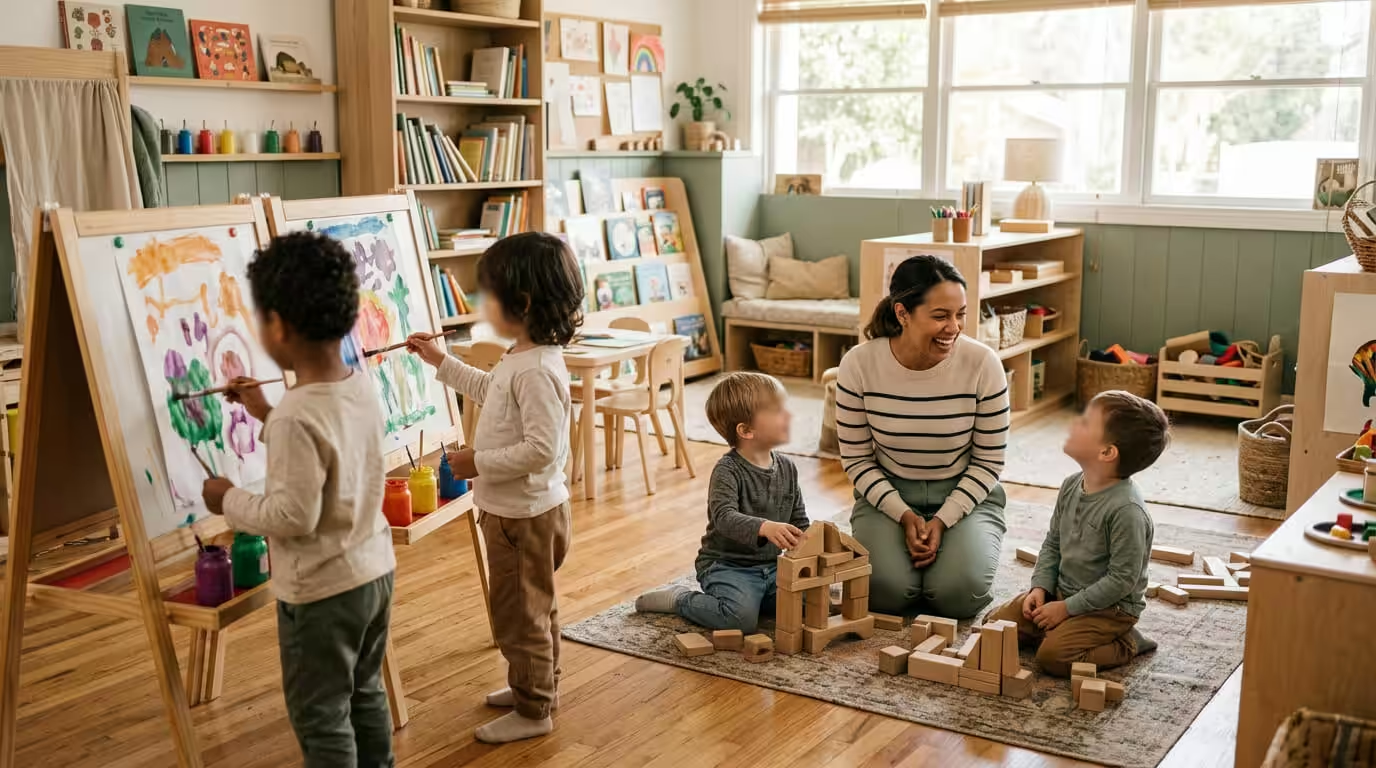
This isn’t a figure of speech. In the first years of life a child’s brain is built at astonishing speed — more than a million new neural connections form every second, according to the Center on the Developing Child at Harvard. That architecture is laid down from the bottom up through everyday experiences and warm, responsive relationships, and it becomes the foundation for everything that follows: attention, memory, language, self-control. A good preschool is, quite literally, an environment for building brains — rich in the conversation, play and back-and-forth that early development runs on.
In the early years you’re not just minding a child — you’re helping build the brain they’ll use for life.
The Foundations That Matter Most Aren’t Academic
Ask what preschool is “for” and many people picture letters and numbers. But the deepest work of the early years is social and emotional: learning to separate from a parent and trust another adult, to share and take turns, to name a feeling instead of hitting, to recover from a small setback and try again. These are the foundations that later school — and later life — are built on, and they’re far harder to teach at ten than at four. A warm, well-run preschool grows them daily, mostly through play and relationships rather than lessons.
Language, Curiosity and Early Thinking
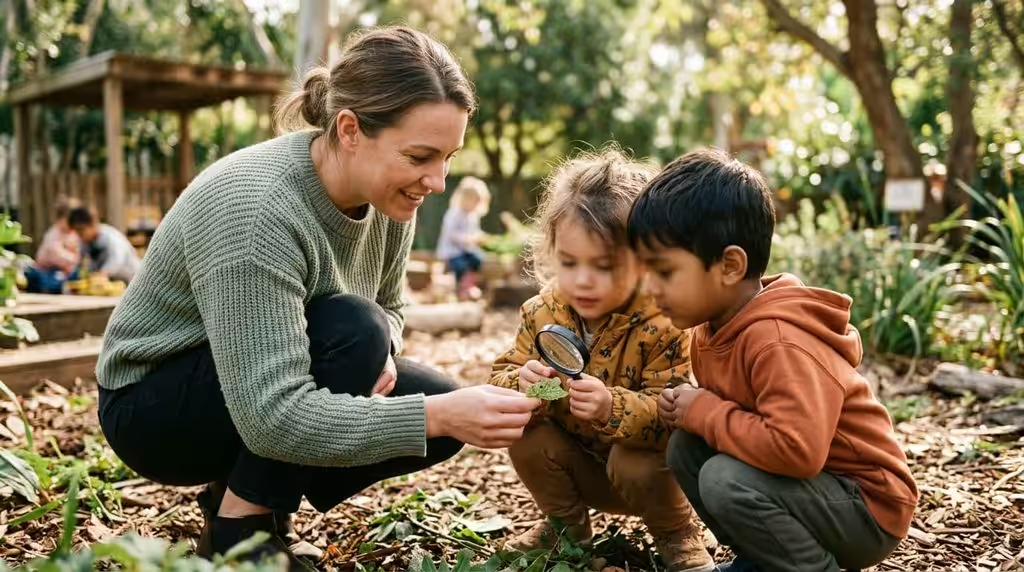
Preschool is also where language blooms — through stories, songs, conversation and being genuinely listened to — and where a child’s natural curiosity is either fed or flattened. The best early education doesn’t rush children into worksheets; it builds early literacy, numeracy and thinking through play, exploration and real materials. That’s true whether the setting leans Montessori, Reggio, play-based or a thoughtful blend, which we compare in our guide to preschool teaching methods.
The Payoff Lasts Far Beyond the Early Years
The benefits aren’t only immediate. Decades of research — including the economist James Heckman’s well-known work — find that quality early childhood education produces some of the highest long-term returns of any education investment, in better school outcomes, health, and life prospects. The key word is quality: the gains come from warm, responsive, well-staffed settings, not simply from a child being enrolled somewhere. A mediocre preschool and an excellent one are not the same purchase.
Quality Is the Whole Point
Which is the honest caveat under all of this: preschool is powerful when it’s good. The very same years that a great setting uses to build language, confidence and curiosity, a poor one can waste. That’s why choosing well matters so much — and why we wrote a whole checklist for choosing a good preschool to help.
How We Think About It at Sun Preschool
At Sun Preschool, everything is built around making these early years count: a warm, stable team that gives children the security to explore, English woven through the day to stretch language, real time outdoors, and a curriculum that builds thinking through play rather than drilling. We’re not trying to turn four-year-olds into pupils early; we’re trying to give them the foundations that make everything afterwards easier and happier.
The best way to see whether that’s working is simply to watch our children at it.
The Takeaway: These Years Are Foundational — Spend Them Well
Preschool, done well, isn’t childcare with a nicer name. It’s the period when a child’s brain, character and love of learning are being built, with benefits that stretch across a lifetime. So take these years seriously, choose a setting for its warmth and quality rather than its slogans, and know that the “just playing” you see is the deepest kind of learning there is.
If you’d like to see it in practice, we’d love to welcome you to Sun Preschool.
References & Further Reading
- Center on the Developing Child at Harvard University — Brain Architecture
- The Heckman Equation — Early Childhood Education Has a High Rate of Return
- National Association for the Education of Young Children (NAEYC) — The Power of Playful Learning in the Early Childhood Setting
Frequently asked questions
Does my child really need preschool, or can I do the same at home?
A loving home does a great deal, and involved parents matter more than any institution. What a good preschool adds is a rich social world — other children, other trusted adults, shared routines — plus trained educators and materials designed for this stage. Many families find it’s not home or preschool but the two together that give a child the best early years.
Isn’t it all just play? When does the real learning start?
For a young child, play is the real learning — it’s how they build language, problem-solving, self-control and early maths and literacy. The research is clear that hands-on, playful experiences develop the brain more effectively at this age than worksheets do. So the “just playing” you see is not a break from learning; it’s the main event.
How much difference does the quality of the preschool actually make?
A lot. The well-documented benefits of early education come specifically from quality settings — warm, responsive, well-staffed, well-run. A weak preschool can squander the very years a strong one uses to build lifelong foundations. It’s one of the clearest cases where choosing carefully genuinely pays off.