
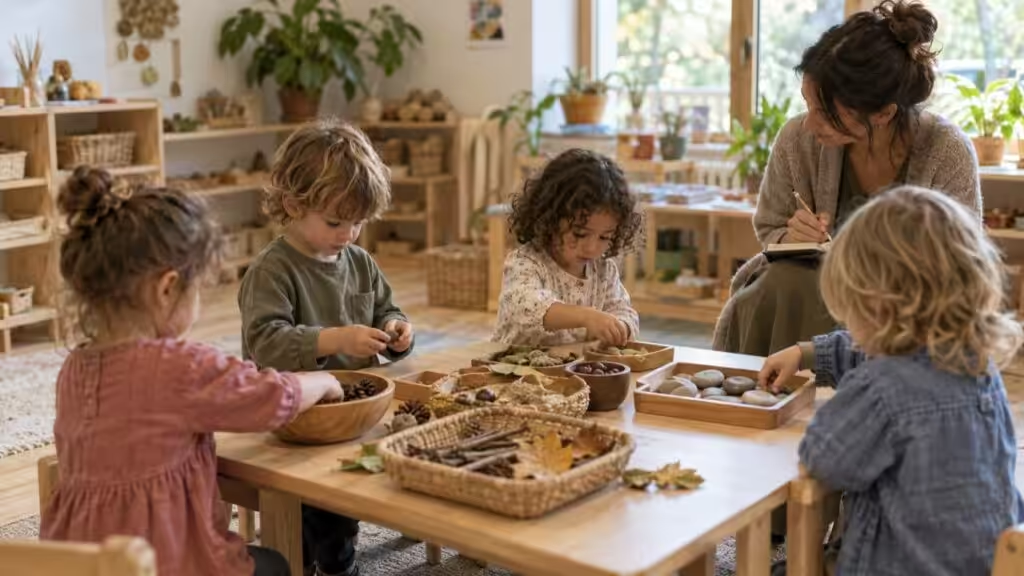
Türkiye’s Maarif Model preschool curriculum is the Ministry of National Education’s framework for young children’s learning and development. It connects areas such as language, maths, science, movement, art and music with social and emotional skills, and includes play, observation and family involvement. The quality of each child’s day depends on how teachers put it into practice.
You do not need to learn the terminology. Ask what your child does, how their teacher supports them, and which everyday examples help the teacher follow their progress.
What Does the National Curriculum Set Out?
In Türkiye, preschool education comes under the Ministry of National Education (MEB). Its current curricula for every stage of schooling go by the name of the “Türkiye Century Maarif Model” (Türkiye Yüzyılı Maarif Modeli; maarif is an old Turkish word for education). The national preschool curriculum (in Turkish) is built on that shared framework and adapted for young children. It looks at learning across several areas of skill together: Turkish (language), maths, science, social studies, movement and health, art and music are linked with social and emotional learning skills, conceptual skills, dispositions, values and literacy skills.
The document also covers play, day-to-day planning, adapting activities to the child, observation and family involvement. The point isn’t to add more subject names to the timetable; it’s to help children connect one experience with another. And having a national curriculum doesn’t mean every school puts it into practice equally well.
The national framework and the methods a school chooses aren’t the same thing, either. A school can work within the framework while drawing on different kinds of play, projects and classroom set-ups. The teaching team can tell you how the two fit together in their setting.
What Does a Skill Look Like in Everyday Life?
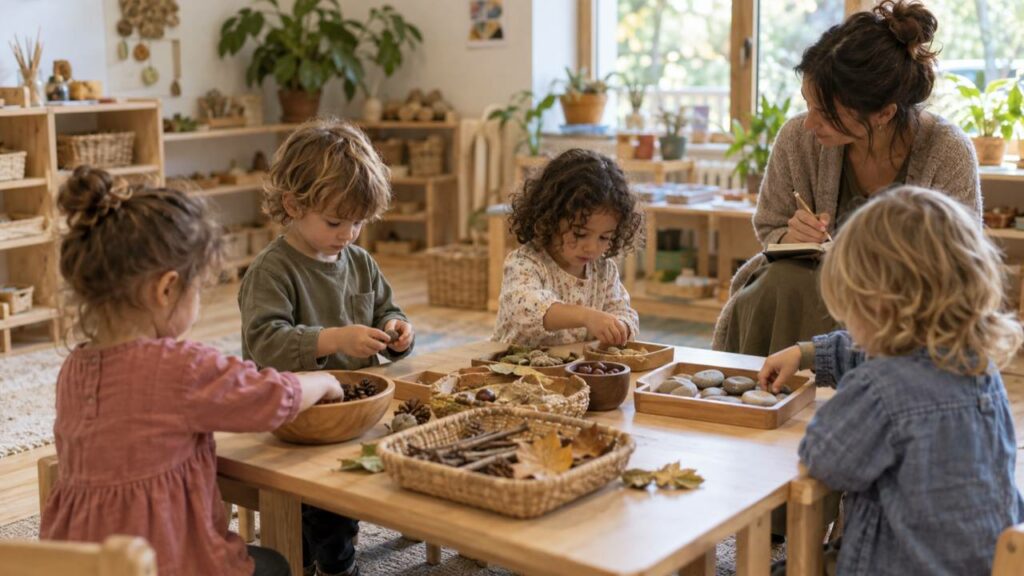
These example classroom scenes show how the curriculum’s ideas might appear in everyday activities:
| What the Child Is Doing | What You Could Talk About |
|---|---|
| Sorting leaves in different ways | Noticing features, grouping things and describing them |
| Building a bridge, then trying again | Comparing, planning and looking for solutions |
| Agreeing with a friend whose turn it is | Saying what they need and deciding together |
| Drawing how the garden has changed | Observing, recording and comparing over time |
This isn’t an official mapping to curriculum codes, and it isn’t a list of required activities. It just shows how one ordinary activity can touch several areas at once. Real learning is best discussed in terms of what the children actually did and what the adult noticed. Our article on preschool woodworking offers an example of hands-on work.
Where Does Play Fit In?
The curriculum treats play as the natural setting for learning. That doesn’t mean “leave the children to it”. Preparing the space, watching closely and stepping in with support when it’s needed are all the adult’s job.
If a child spends a long time with the same material, the teacher might try to work out what line of thinking they’re following. If another child is finding it hard to join in, the task or the materials can be adapted. What matters is shaping the plan around how the children are really taking part.
Our guide to Plan-Do-Review explains one approach built around making choices, trying things out and looking back on what happened. You can ask a school to show you, with examples from daily classroom life, how that kind of approach connects with the national curriculum.
Is Assessment a Test?
The curriculum’s approach to assessment draws on observation, the things children make, and what they do and say day to day. The aim is to gather information that helps adults understand a child’s experience and what support should come next.
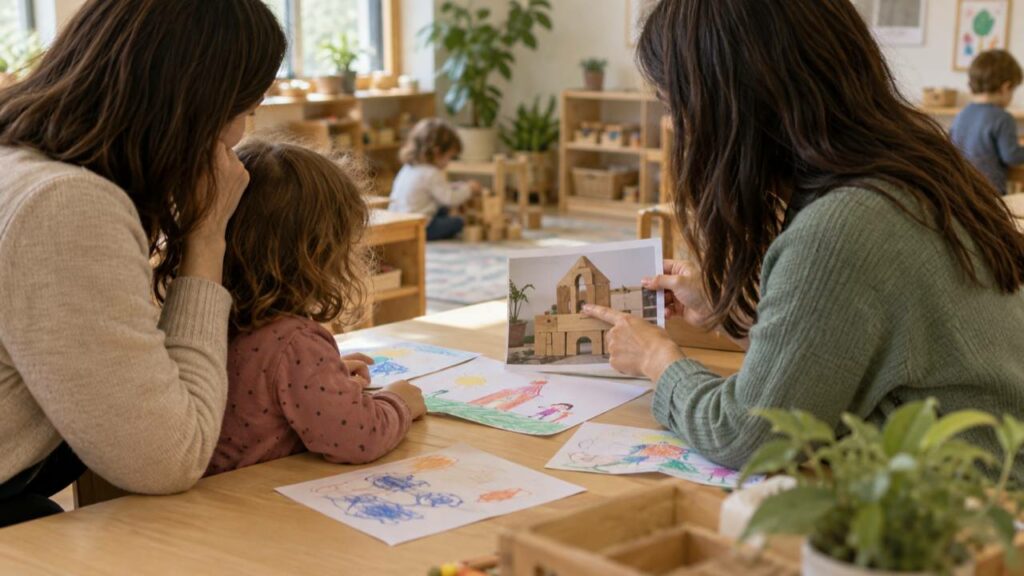
When you talk to your child’s teacher, try asking “Is there an example that shows this?” rather than just “Are they doing well?”. A drawing, a story they told, or a choice they made during play can say a lot. No single piece of work explains a child’s whole development.
It also matters what happens with that information. If your child is finding something hard, do the materials, the instructions or the adult support change? Is what you know about your child at home taken into account? Keeping records isn’t, on its own, a sign of good practice.
Does Family Involvement Mean Lessons at Home?
Family involvement is much more than finishing worksheets the school sends home. Sharing what you know about your child, talking together about everyday experiences, or doing a small activity together all help build the connection.
The curriculum takes into account that families have different circumstances and different ways of taking part. Families cannot all come into school at the same time of day, and they may have different materials at home. It’s worth talking with the school about realistic ways to link your child’s home life with their learning.
One family might tell the class about a game they used to play as children; another might talk with their child about something they spotted on a walk. These are only examples, not homework every family is expected to do.
A curriculum reaches a child not through the headings in a document, but through what actually happens in their day.
How Does Sun Preschool’s Programme Fit With the National Framework?
Sun is an MEB-licensed preschool. Alongside the national curriculum, our education plans include play, English interaction throughout the day, hands-on science and maths, and time in the garden and outdoors. You can see how these experiences are brought together for each age group in our curriculum.
For more on the hands-on side of GEMS, see our guide to science and maths in the early years; for how different approaches compare, see our article on teaching methods. When you visit, asking which materials and what kind of adult support bring a goal to life in the classroom will tell you more than comparing programme names. For the outdoor part of the day, see what to consider when children play outside in winter.
Questions to Ask When You Visit
- What needs are taken into account when planning for my child’s group?
- How do you support a child who’s finding an activity difficult?
- What examples of my child’s development will you share with us?
- Where do play and outdoor time fit into the daily routine?
- How does what families share, and how they take part, shape your planning?
- How do you decide what a child’s next step in learning should be?
Weigh up the answers alongside the space and the materials you see. The name of the national curriculum doesn’t answer any of these questions on its own.
If you’d like to talk about what a day of learning looks like in your child’s age group, you can arrange a visit.
References & Further Reading
- Ministry of National Education (MEB), Board of Education and Discipline — Official page and downloadable text of the national preschool curriculum (in Turkish).
- Ministry of National Education (MEB) — List of current national curricula (in Turkish).
Frequently asked questions
Does the Maarif Model mean primary school lessons start earlier?
The preschool framework should be about skills and experiences that suit a young child’s age. It isn’t the same as copying a primary school day for younger children. Ask what the day actually looks like in practice.
If a school uses a different method, has it abandoned the national curriculum?
A teaching method and the national framework are two different things. A school should be able to explain how the approach it has chosen connects with the curriculum. Don’t judge by the name of the method alone.
Do we have to work through a curriculum book at home?
Family involvement isn’t only about books or worksheets. Ask the school for ideas that suit your child’s needs and your family’s circumstances. Everyday conversations and experiences you share are valuable too.