
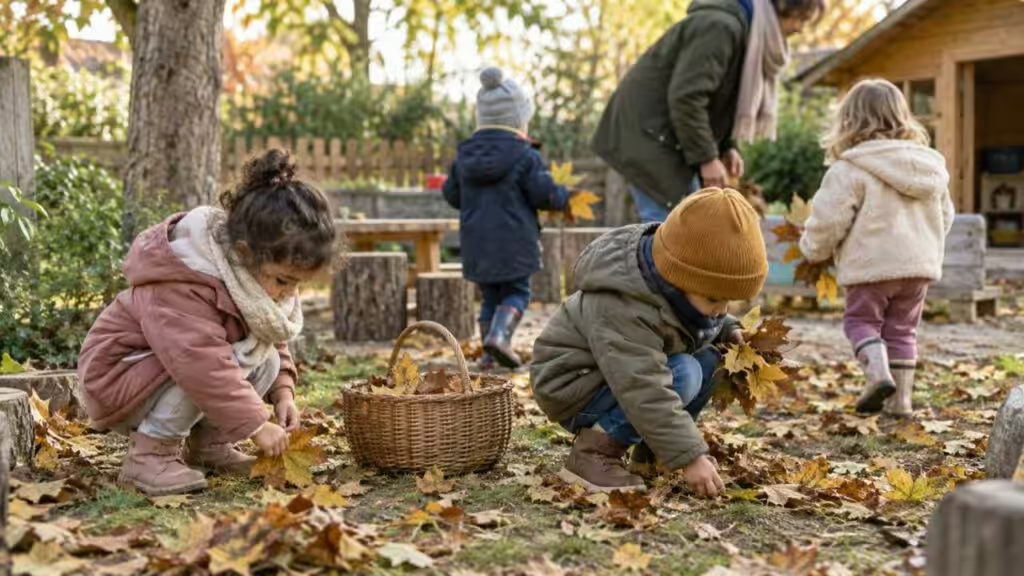
“It’s freezing; let’s keep them in today.” That instinct comes from wanting to protect your child. But a chilly day on its own isn’t a reason to skip outdoor play. What matters is the whole picture: clothing, wind, rain, the ground underfoot, how long they’ll be out, and how your child is that day.
The goal isn’t to stay outside whatever happens. It’s to set things up so your child can move freely, stay dry, and come inside when they need to. Sometimes a short spell in the garden is just right; sometimes the weather or the ground isn’t safe, and it makes more sense to plan something indoors.
Does Cold Weather Make Children Ill?
A cold is a viral infection; you don’t catch one simply by going out in chilly weather. The CDC’s page on the common cold explains that colds are caused by viruses. That doesn’t mean it’s fine for a child to get chilled or stay wet, though.
Young children lose heat quickly and can become uncomfortable in the cold, which matters in its own right. The American Academy of Pediatrics’ advice on winter outdoor play explains why suitable clothing, supervision and breaks to warm up when needed are important.
If your child has a health condition that limits time outdoors, follow their doctor’s advice. And don’t brush off new symptoms, obvious listlessness or difficulty breathing with “a bit of fresh air will do them good”. Whether a child is well enough for school at all is a separate decision, covered in our guide to keeping a sick child home.
Should You Go by the Thermometer Alone?
A thermometer is useful, but the same temperature can feel very different on a windy, dry day and a calm, sunny one. Getting soaked in the rain, icy ground or strong wind all change what’s sensible, too.
Before you head out, run through a few questions:
- Is the ground slippery? Is the area the children will use safe?
- Is there strong wind, a storm or any other weather warning?
- Are their clothes right for staying dry and moving about?
- Can everyone get back inside quickly if needed?
- Can an adult keep the children easily in view?
- Does your child’s health, or the kind of day they’re having, call for extra limits?
There’s no single temperature or number of minutes that suits every child and every setting. Conditions can also change while children are playing, so a decision made at the door may need rethinking.
Dressing for an Istanbul Winter
Istanbul winters are rarely harsh. They tend to be cool, damp and windy rather than bitterly cold. According to the Turkish State Meteorological Service’s figures for Istanbul, the average temperature from December to February is around 7–9 °C, average lows are 4.2–6.5 °C, and roughly every other day brings some rain. There are occasional snowy spells, too, when temperatures drop below freezing. So in Istanbul the real challenge is usually staying dry and out of the wind, not extreme cold.
Several thin layers work better than one thick coat, because they’re easy to adjust as conditions change. A child bundled up so thickly they can’t move, or who ends up sweating, won’t be comfortable either. What counts is clothing that fits and suits what they’re doing.
A day’s outfit might look like this:
- A comfortable base layer.
- A warm middle layer that can come off if needed.
- A waterproof, windproof outer layer with a hood.
- Waterproof shoes or boots that suit the ground.
- A hat and gloves for the colder snaps and snowy days.
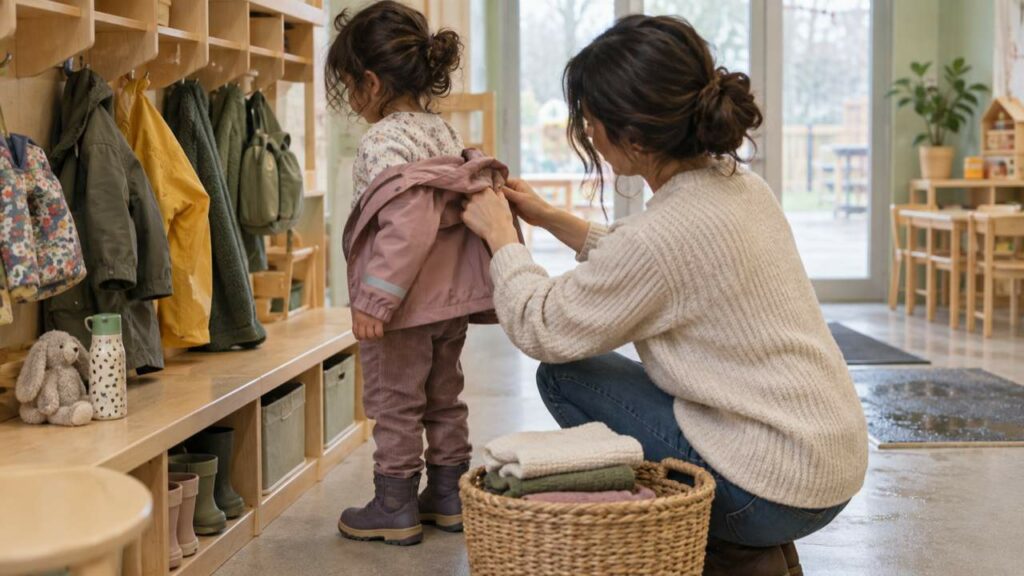
- Dry socks and a complete spare set of clothes in case they get wet.
Avoid long cords or ties at the neck or on hoods that could catch on something. Choosing clothes your child can help put on themselves makes daily life easier. A good fit and ease of use matter more than the price of the coat.
What Can They Play Outside?
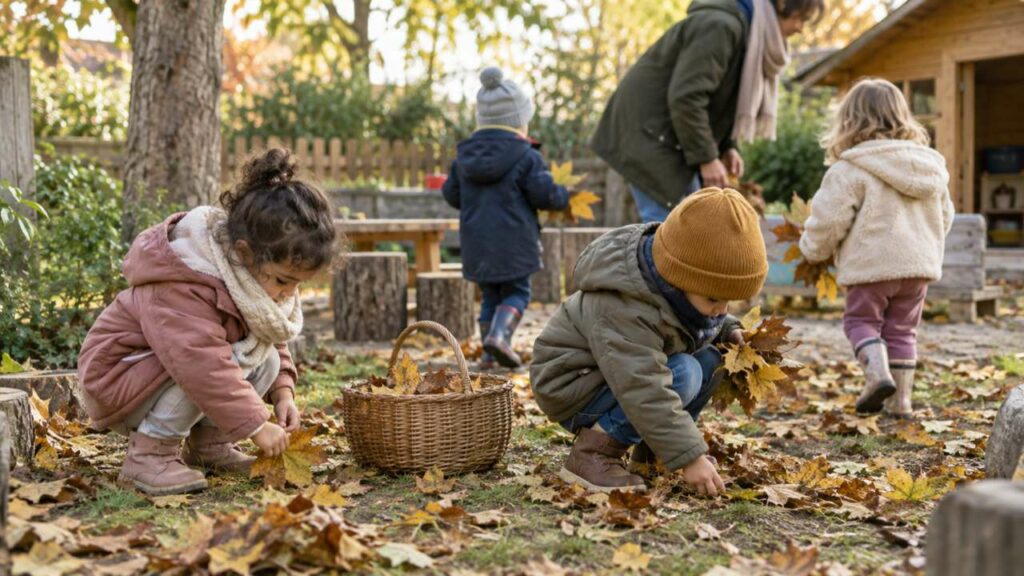
A winter day isn’t only for running around. Noticing how the leaves have changed, where the puddles gather or how the shadows fall can spark real curiosity. A quick hunt-and-find game, a ball or a suitable walk keeps them moving.
You can scale down a favourite game to suit the weather. Finding a few objects in the garden and drawing them indoors afterwards links what happens outside with what happens inside. Choose something that keeps them moving rather than anything that means standing still for a long time.
Our guide to forest school and learning outdoors explains how time outside connects with classroom learning. The colder months are a chance to see the same place change, while health and safety limits still apply. For the wider place of outdoor learning, see our guides to preschool teaching approaches and the national preschool curriculum.
Winter outdoor play isn’t a test of who can stand the cold longest. It’s an experience that suits the conditions.
When Is It Time to Come In?
If your child is clearly cold, wet, unusually quiet or struggling to move comfortably, stop playing and go somewhere warm and safe. When the weather or the ground becomes unsafe, it’s the adult who decides whether “just five more minutes” is OK.
Worrying signs such as drowsiness, marked confusion, loss of coordination, or skin that is very cold or has changed colour need a health assessment. In an emergency, such as a problem with consciousness or breathing, call 112, Türkiye’s emergency number. Don’t assume serious symptoms will pass with a break from play.
Outdoor Time at Sun Preschool
Time outdoors is part of everyday life at Sun. Our parent handbook explains that, with the right preparation, children go outside in the cold and in light rain too, and stay in only when conditions are genuinely unsafe.
That’s why a coat that suits the season, and a set of spares, make the school day easier. Please tell your child’s teacher about any particular health needs. Our packing checklist helps you sort out what to send each day from what stays at school. For a look at another part of the day, read about chess lessons at Sun.
If you’d like to talk about what an outdoor day would look like for your child, you can arrange a visit.
References & Further Reading
- American Academy of Pediatrics (HealthyChildren.org) — Winter safety tips: staying warm and safe outdoors.
- Centers for Disease Control and Prevention (CDC) — About the common cold: causes and symptoms.
- Turkish State Meteorological Service (MGM) — Official climate statistics for Istanbul (in Turkish).
Frequently asked questions
Can children play outside in light rain?
It can be fine with the right outdoor clothes, safe ground and an adult keeping watch. Keep an eye on whether your child is staying dry and comfortable. If the weather turns unsafe, the plan changes.
My child has a runny nose. Should they stay in?
A runny nose alone cannot tell you what is right for every child. Think about how they are overall, whether anything else is going on, and what your doctor advises. It’s also worth finding out the school’s health rules.
Can wet clothes wait until playtime is over?
Don’t let your child stay wet and uncomfortable. Change into dry clothes and move somewhere warm. Having spares ready makes this much easier.
Should every child stay outside for the same length of time?
Conditions, age and how each child is doing all vary. How long they stay out is adjusted as you go, by watching them and making sure they can come in safely. There’s no universal target.