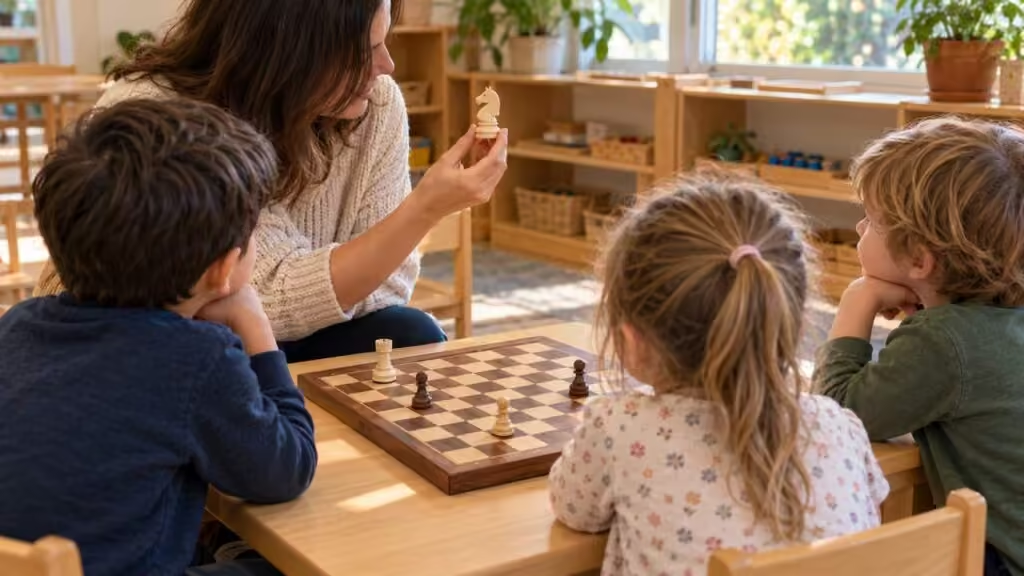
Since the 2026–2027 school year, we have run chess lessons at Sun Preschool together with İstanbul Satranç Derneği (İSD), the Istanbul Chess Association. Our chess teacher comes to us through İSD. Children get to know the game with a teacher from one of Türkiye’s long-established chess institutions, in sessions suited to their age.
For young children, chess is a game to share and learn through playing. Choosing where a piece goes and waiting for a friend are small but meaningful moments. At Sun, we make time for chess each week, with lesson lengths that vary by age.
Who Is the Istanbul Chess Association?
The Istanbul Chess Association’s history dates back to 13 August 1943. For many years after the Turkish Chess Federation was founded in 1954, İSD handled its international relations and programme in practice. The association brings this long history in Turkish chess to its collaboration with Sun.
Why Introduce Chess in Preschool?
Playing together means considering your own wishes and the other person. In chess, waiting for a turn, watching a friend’s move and following shared rules are all part of the game.
Pausing before moving a piece makes room to think. “What happens if I go here?” can be the beginning of a small plan. A child makes a choice, sees what happens and thinks about the next move. With an adult alongside, they also get used to explaining an idea and trying another way.
Winning and losing belong to this experience too. Children learn to share their delight, express disappointment and return to the game. A calm adult can help them make sense of those feelings. “Let’s have another go” offers a simple way to keep enjoying the time together.
The Ministry of National Education’s Preschool Education Programme includes games with rules. Chess offers opportunities to follow a shared rule, take turns and make decisions. Children put explanations into practice, ask for help and show their understanding by moving a piece.
For the question “Is four too young for chess?” and a discussion of the research, see our guide to starting chess in preschool. Our guide to preschool teaching approaches offers a wider context for thinking about this experience.
The pleasure of chess is in thinking about a move, trying it out and keeping the game going together.
How Do Chess Lessons Work at Sun?
Chess lessons take place weekly, and their length depends on the group:
| Group | Lesson Length |
|---|---|
| Caterpillars (ages 3–4) | 15 minutes |
| Cocoons (ages 4–5) | 20 minutes |
| Butterflies (ages 5–6) | 25 minutes |
Short sessions help young children stay interested and give their attention to the game. Early chess begins with getting to know the board and pieces through brief, playful tasks. Time to listen, try something and look again lets children join in step by step.
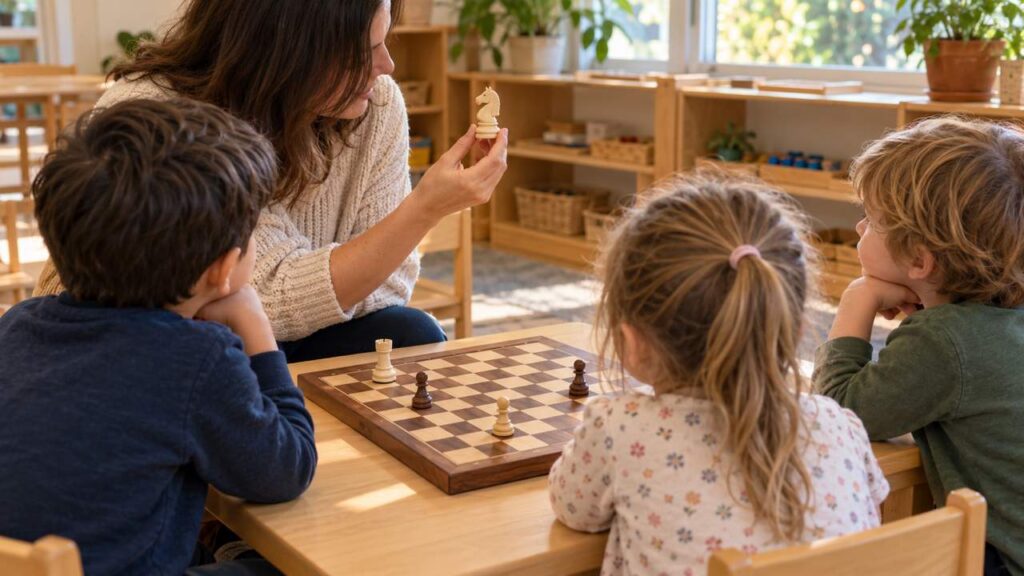
At first, the shapes of the pieces and the squares on the board can be interesting in themselves. A child may want to pick up a piece, ask its name or find out where it can go. Following that curiosity and answering clearly makes the introduction a natural conversation. Looking together, listening to the child and sharing a small attempt are simple ways to explore.
Chess and Sun’s Other Specialist Classes
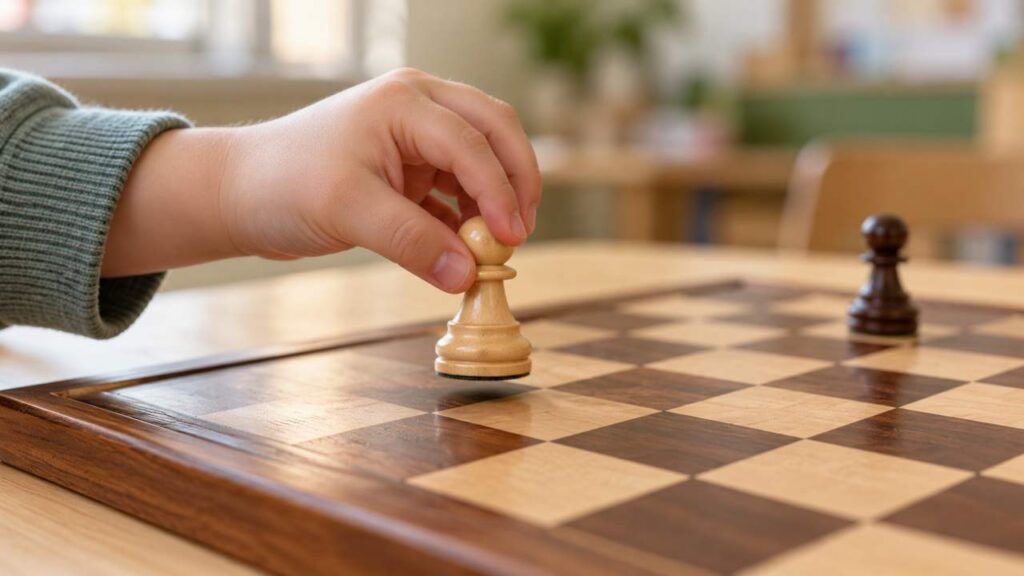
Chess is one of Sun’s 7 specialist classes, alongside music, modern dance, ballet, gymnastics, robotics and creative drama. These activities let children discover different interests during the school day. Our curriculum page explains the activities for your child’s age group and how they fit into the day. For outdoor experiences, see our guides to learning in nature and playing outside in winter.
References & Further Reading
- İstanbul Satranç Derneği — History of the Istanbul Chess Association (in Turkish).
- İstanbul Satranç Derneği — The association’s background and role in Turkish chess (in Turkish).
- Ministry of National Education — Preschool Education Programme (in Turkish).
Frequently asked questions
Who teaches chess at Sun?
Our chess teacher comes to us through the Istanbul Chess Association. We have run the lessons together with İSD since the 2026–2027 school year.
How often are chess lessons held, and how long do they last?
Lessons take place weekly. Sessions last 15 minutes for Caterpillars (ages 3–4), 20 for Cocoons (ages 4–5) and 25 for Butterflies (ages 5–6).
Do I need to teach my child chess before their first lesson?
No prior knowledge of chess is needed. Preschool beginners get to know the board and pieces through short, playful tasks. Simply explain that they will learn a new game together.