
Mud under the fingernails, a beetle studied for ten minutes, a wobbly log balanced along, a den half-built and abandoned for something better — this is what serious early learning can look like. It rarely makes it into a glossy brochure, but time outdoors, in real nature, is one of the most valuable things a preschool can give a young child.
This article explains what “forest school” and outdoor learning actually mean, why dirt, animals and real tools matter more than they look, and what to check when a school promises “outdoor time.” Spoiler: a balcony and a real garden are not the same thing.
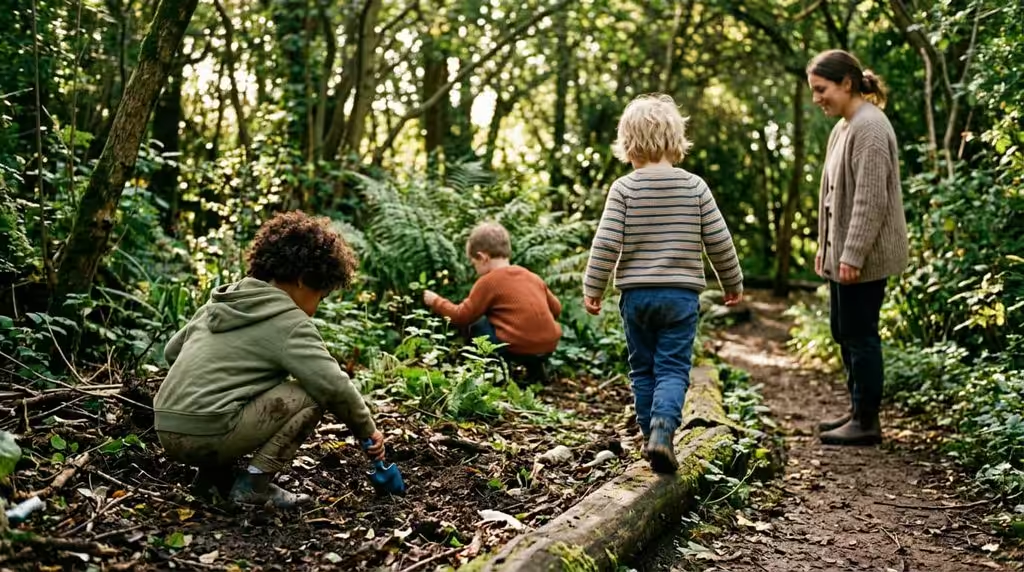
What Forest School Actually Is
Forest School isn’t an occasional trip to the park. It’s a long-term, regular programme of sessions in a woodland or natural setting, built around the child’s own exploration. It’s hands-on and child-led, and it deliberately offers supported risk — climbing, balancing, using real tools — as a route to confidence and good judgement. The Forest School Association describes it as aiming at the holistic development of resilient, confident, independent and creative learners through an ongoing relationship with the natural world. The key words are regular and relationship: it’s the repetition over time, not a one-off adventure, that does the work.
Not every preschool can run true woodland Forest School, but the spirit of it — real, frequent, meaningful time outdoors — is something any good school can offer.
Why Dirt, Animals and Real Tools Matter More Than They Look
Outdoor play looks like “just playing,” which is exactly why its value is easy to underestimate. In fact, it works on nearly every part of a developing child at once. Climbing, digging and balancing build strength, coordination and body awareness. Handling tools and loose natural materials sharpens fine motor control and problem-solving. Caring for a plant or an animal grows empathy and responsibility. And the sheer sensory richness of being outside supports focus, mood and wellbeing in ways a bright indoor room simply can’t replicate. Research on nature-based and outdoor play links it to better mental health, social competence, creativity and resilience.
Some of the most important early lessons can only be learned outdoors, with mud on your hands.
The Point of “Risky Play”
The phrase makes parents flinch, understandably — but “risky play” doesn’t mean carelessness. It means letting a child climb a little higher, balance along a log, or use a real (child-sized) tool, with an adult supporting rather than forbidding. Handled well, this is how children learn to assess a situation, judge their own limits, concentrate hard, and recover when something doesn’t work. A scraped knee heals; the judgement learned lasts. The skill a good school brings is knowing the difference between a hazard to remove and a risk worth keeping.
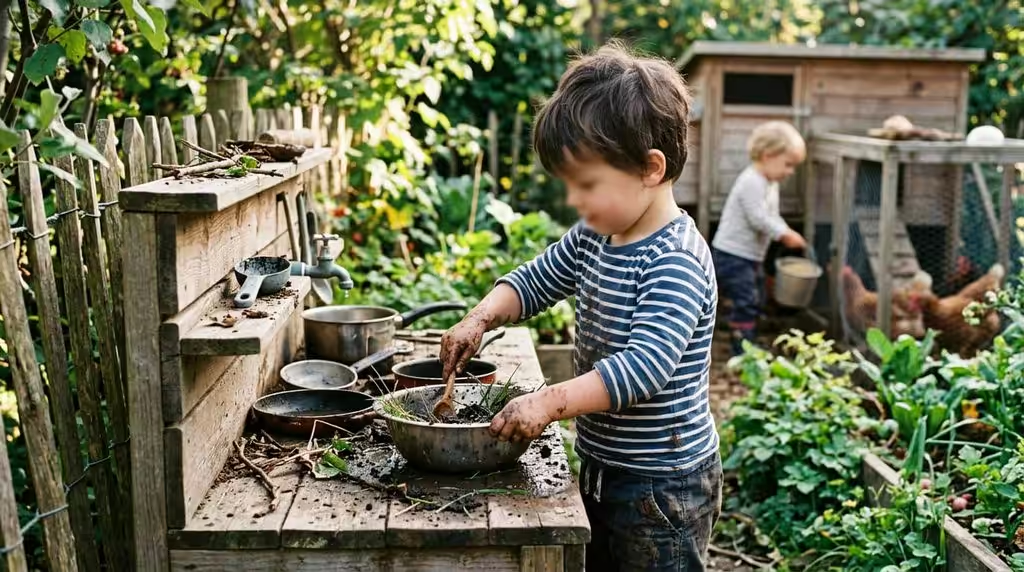
“Outdoor Time” — What to Actually Look For
Almost every school will tell you children go outside. The question is what “outside” means. A token balcony with some plastic toys is not the same as a real garden with soil, trees, room to run and things to build with. When you visit, ask how much time children genuinely spend outdoors each day, in what kind of space, and in what weather — the best settings go out in light rain and cold too, properly dressed. And go and stand in the outdoor space yourself; photographs are generous. (Our wider checklist for choosing a good preschool covers what else to look for on a visit.)
How We Do the Outdoors at Sun Preschool
Outdoor life isn’t an add-on at Sun Preschool; it’s part of the everyday. Our children have a real garden to spend time in — around 160m² of it — along with a mud kitchen for exactly the sort of glorious, purposeful mess this article is about, a small ecology garden where things are grown, a chicken coop that turns “responsibility” from a word into a daily habit, and a woodworking and maker area where small hands use real tools with real supervision. It’s our version of the outdoor-learning spirit: frequent, hands-on, and woven into the day rather than saved for good weather.
It’s also the part of the school children tend to talk about at dinner — which tells you most of what you need to know.
The Takeaway: Outdoors Is Where a Lot of the Learning Happens
Real time in nature isn’t a nice extra on top of “proper” learning — for a young child, it is proper learning, working on body, mind and character all at once. So weigh outdoor space heavily when you choose, look past the brochure to the actual garden, and don’t be put off by a bit of mud or a supported risk. Both are usually signs of a school that understands children.
If you’d like to see what real outdoor learning looks like day to day, come and visit Sun Preschool — wear shoes you don’t mind getting muddy.
References & Further Reading
- Forest School Association — What is Forest School?
- Children & Nature Network — Research Digest: Risk-taking in natural environments
- National Association for the Education of Young Children (NAEYC) — The Power of Playful Learning in the Early Childhood Setting
Frequently asked questions
Isn’t outdoor play just playing — do children actually learn anything?
They learn a great deal, precisely because it looks like play. Outdoors, children build strength and coordination, fine motor skills, problem-solving, empathy (through caring for plants and animals), focus and resilience — often several at once. For a young child, play in a rich natural setting is one of the deepest forms of learning there is, not a break from it.
What about cold, mess and the risk of getting hurt?
Mess washes off, and the right clothes handle most weather — good settings go outside in light rain and cold, which is part of the benefit. As for risk, forest-style learning uses supported risk deliberately: children take on challenges with an adult alongside, which is how they learn judgement and confidence. A skinned knee heals; the self-belief and good sense stay.
How much outdoor time should a preschool offer?
There’s no single magic number, but “as much as the day and weather sensibly allow” is the right instinct — daily, not occasional, and in a real outdoor space rather than a token one. Ask the school specifically how much time children spend outside and where, and go and see the space for yourself rather than trusting a photo.