
“Why hasn’t our seed come up yet?” When a child who’s been gardening asks that, real learning has already begun. Results don’t come straight away; light, water, soil and time all have to do their part. Your child isn’t just growing a plant; they’re practising waiting, watching closely and noticing the difference their own actions make.
You don’t need a big garden. A suitable pot, a safe plant and a few minutes of looking after it together can be a meaningful experience. The point isn’t a perfect harvest; it’s your child being part of the process.
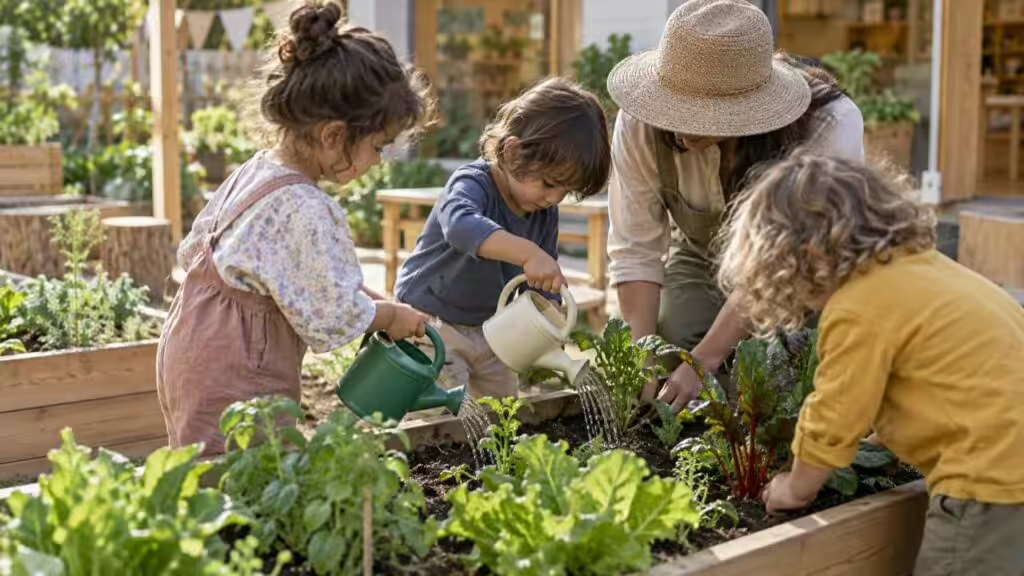
What Do Children Learn When They Sow Seeds?
To plant a seed, a child makes a hole, compares the gaps between seeds and thinks about how much water to use. Days later, they spot the first change. Cause and effect, quantity and time all show up inside an everyday job.
You can add words to the experience: damp, dry, thin, thick, short, tall, shoot, root. There’s no need to teach them as a list. An observation like “The soil was drier yesterday” connects the word with something they have experienced.
Leave room for their predictions too: “What do you think it’ll look like tomorrow?” Then look again the next day. If the guess turns out wrong, talk about what changed rather than correcting them. Not seeing a result every day is part of learning as well. For ways to think through your child’s questions together, see our guide to philosophy for children.
How Can Children Take Responsibility in the Garden?
“This plant is yours; you’re in charge of everything” can be a lot for a young child. Choose a single task that suits their age, with an adult supervising: fetching the watering can, pointing out dry leaves, or putting the label back in place.
Don’t tie the task only to success. When a plant wilts, rather than “You forgot, and now it’s died,” work out the reasons together. The adult carries the real responsibility for the plant’s care; the child learns by taking part.
When two children are working on the same job, they also need to take turns and look after a shared space. Small agreements like “You pour first, then I’ll fill the can” turn gardening into a social experience.
What Do Measuring and Counting Look Like in the Garden?
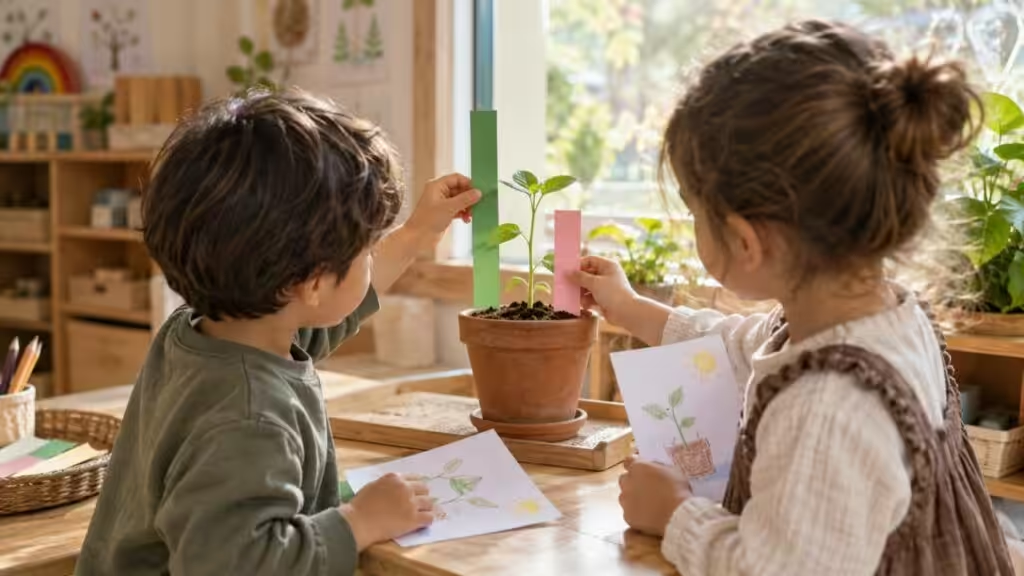
A ruler isn’t the only option. A child can compare a shoot’s height with a piece of string or a strip of paper. They can count new leaves, or draw the difference between two pots. These records let them look back at how the plant was a week ago.
In a simple notebook, an adult can write the date and the child can add a drawing. It doesn’t need to be a perfect drawing every day. Differences like “taller”, “new leaf” or “leaning a bit” get the conversation going.
These experiences are a natural extension of hands-on science and maths and play-based learning. A garden’s value isn’t in being a pretty extra separate from the classroom; it’s in carrying everyday curiosity outdoors.
Can Gardening Help With Eating?
Watching a plant grow can make a food feel familiar. Helping to harvest and prepare it can make it easier for some children to try a taste. Still, there’s no saying for certain that they’ll eat a vegetable they’ve grown.
Don’t tell your child, “You grew it, so now you have to finish it.” Looking at a leaf or helping to wash it counts as taking part too. Our guide to picky eating explains how to build a relationship with food without pressure.
Do Children Need to Touch Animals to Learn About Them?
No. Watching birds, insects and plants from a safe distance also teaches children to care for living things. Catching animals or holding them isn’t a necessary part of learning about nature.
With poultry, hygiene matters even more. Birds can look healthy and clean and still carry germs such as Salmonella that make people ill. That’s why the hygiene habits described below aren’t optional whenever children are involved with animals.
You can learn to care for a living thing without ever picking it up.
What’s in Sun Preschool’s Garden Programme?
Sun’s programme includes raised vegetable beds and seasonal planting. The garden calendar gives children the chance to follow the journey from seed to growth, and from harvest to the kitchen. Sowing wheat in autumn, watching it grow and connecting it with bread-making is one example of a project within this framework.
There’s also a chicken coop in the school’s outdoor areas, and from 24 months children help look after the hens, always with an adult supervising. A few habits never change: hands are washed with soap and water straight after anything to do with the coop; nobody kisses or cuddles the birds; unwashed hands never go near food or mouths; and the hens and coop equipment are kept well away from where children eat. Children scatter feed, help top up the water, watch and count the hens, and look for eggs, always alongside an adult. Cleaning the coop and bedding, anything involving droppings, collecting and washing eggs, and picking up the birds are jobs for adults only. A child who’d rather keep their distance from the hens can still be fully involved in the garden through plant care and observation. Our comparison of preschool teaching approaches helps put outdoor experiences in a wider educational context.
How Can You Start at Home?
Choose a spot that gets light, and as the adult, get to know the plant beforehand. Fill the pot with your child, draw how it looks at the start, and set aside a short time together for looking after it. Sweeping up spilled soil together is part of the job too.
Make room for “It hasn’t changed today.” Curiosity doesn’t need a new result every day. It’s fine if your child drifts off to other games for a while; you keep up the care as the adult.
If you’d like to talk about what your child could experience in the garden, you can arrange a visit.
References & Further Reading
Frequently asked questions
How old should my child be before we start gardening?
What the task looks like depends on the age and the child. A younger child can help an adult with watering; an older child can compare and keep records. The adult needs to take care of safety around small parts and materials.
Will my child be disappointed if the plant doesn’t grow?
They might be; stay with them and talk about why. Planning a new attempt is part of the process. Not every seed has to turn out the same way.
What if my child doesn’t want to touch the soil?
Don’t push it. Carrying the watering can, watching from a little way off, or drawing all count as taking part. Give them room to get used to the feel of it at their own pace.