
Yesterday it was their favourite; today they won’t touch it. One glimpse of something green on the plate and they want to leave the table. Picky eating in the preschool years can wear a family down. The first goal isn’t to get more food into your child at every meal; it’s to keep their relationship with food calm and safe. Regular meals, small portions and gentle repetition can help. Pressure, on the other hand, can turn the table into a battleground.
Your child’s growth, energy levels and any difficulty they have while eating matter too. If there’s pain, trouble swallowing or a noticeably narrow range of foods, don’t treat it as just a habit.
Why Do They Eat It One Day and Refuse It the Next?
Appetite can change from day to day and meal to meal. A new smell, an unfamiliar texture, or a dish cooked differently from usual can all sway a child’s decision. And “picky eater” doesn’t always describe the same thing: some children won’t eat mixed dishes, while others find it hard to go near anything new.
Try watching calmly for a week. Which foods does your child eat without fuss? When they refuse, are they tired or already full? Do they struggle with a particular firm texture? Rather than counting every mouthful, look for the patterns that keep coming back.
The American Academy of Pediatrics’ advice on picky eaters recommends avoiding pressure and offering new foods again. A first refusal doesn’t mean you can never put that food in front of them again.
Who Decides What at the Table?
The adult plans which foods are offered and when meals happen. The child learns to decide how much to eat, going by their own hunger and fullness. This doesn’t mean handing every decision to your child. It means giving them room to listen to their body within a structure you’ve set.
In practice, it might look like this:
- Serve meals at fairly predictable times.
- Put something they eat happily alongside the new food.
- Start with a small portion; they can always have more.
- Steer clear of “You’re not leaving the table until your plate’s clean.”
- Don’t bargain with pudding or screens to get a food eaten.
- Don’t compare how much they eat with other children.
If your child has a particular feeding or growth issue, this approach will need adapting with your doctor and a dietitian. General advice doesn’t replace an individual treatment plan. If screens at mealtimes are on your mind, see our guide to screen time and daily routines.
How Can You Make a New Food Easier to Accept?
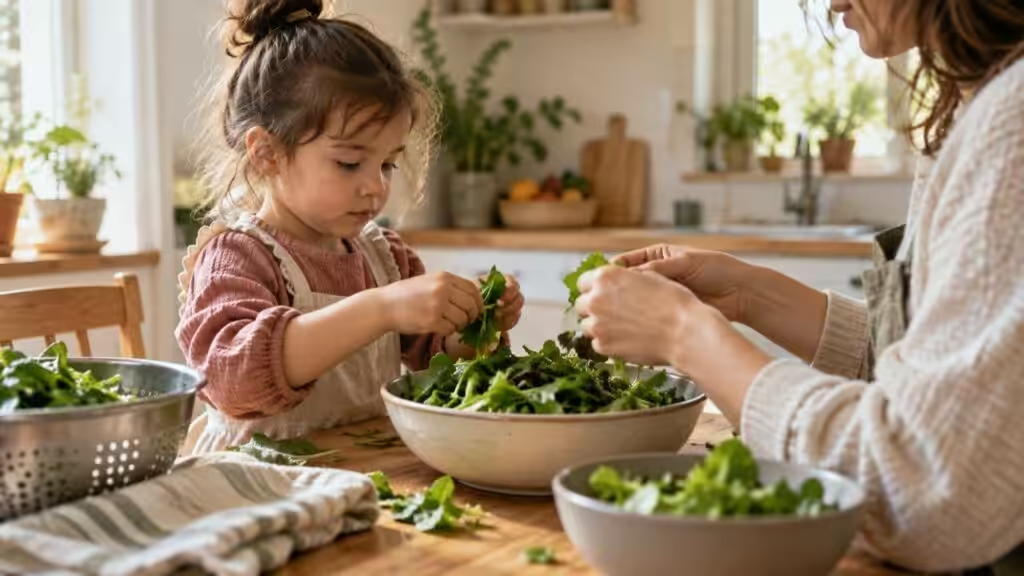
The first step isn’t always a bite. Your child can see the food on the table, get to know its smell, or help serve or prepare it. Instead of “You have to eat this today,” try a calm offer such as “It can just sit on the side if you like.”
Going to the market together or washing vegetables helps a food feel familiar. But that involvement shouldn’t become an obligation to eat. The moment you say, “You made it, so now you have to eat it,” curiosity turns back into pressure.
You can also offer the same food in small amounts on different days. There’s no magic number of tries after which a child is guaranteed to accept it. Rather than hiding a new ingredient inside a favourite dish, be open about what you’re serving; keeping your child’s trust matters.
Could They Be Eating at School but Not at Home?
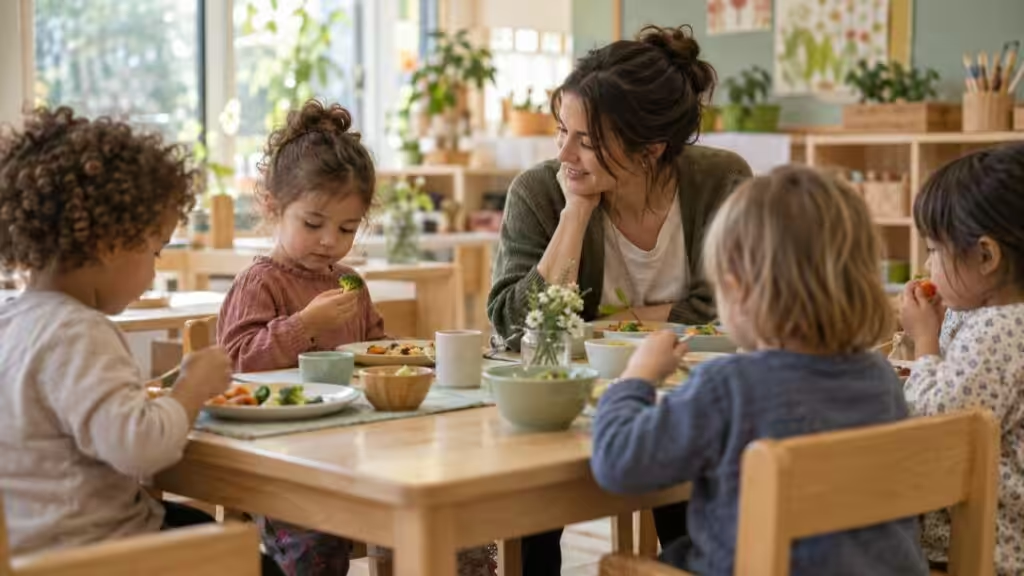
Yes, they could. The setting, the time of day, being with friends and the routine of the meal can all change how a child experiences eating. Seeing other children eat nudges some children towards a new food, but it won’t work the same way for every child.
Rather than only asking the teacher “How much did they eat?”, add a few more questions: Did they sit at the table comfortably? Which foods did they show interest in trying? Did any texture put them off? How was their energy during the day? Answers like these make it easier to understand why things look different at home and at school. Our preschool nutrition guide suggests questions about menus and the kitchen.
A calm table teaches a child more than how to eat; it teaches them to listen to their own hunger and fullness.
How Meals Work at Sun Preschool
At Sun, breakfast, lunch and the afternoon snack are prepared in the school kitchen, and menus are shared on Sun Portal, the school’s parent app. Our parent handbook says children are encouraged to try what’s served and that nobody is made to finish a plate.
Gardening gives children another way to get to know food. Seeing the seed, the leaf and the harvest can help a child recognise a vegetable before it reaches their plate. We go into this in more detail in our guide to gardening with children. That said, there’s no promise that every child will eat what they’ve grown.
When Might Your Child Need More Support?
See your child’s doctor if there’s a clear slowdown in growth, weight loss, pain while eating, coughing, or difficulty swallowing. It can also be worth having your child assessed if the list of foods they’ll eat keeps shrinking, if they’ve cut out a whole food group for a long time, or if meals are consistently very distressing.
Before the appointment, jot down the foods they accept, the textures they struggle with and how long this has been going on. Add what the teacher has noticed too. Concrete details like these help far more than a label like “stubborn” in working out what your child needs. If illness symptoms also raise doubts about attendance, read when to keep a child home from preschool.
If you’d like to talk about your child’s mealtimes and what they need, you can arrange a visit.
References & Further Reading
- American Academy of Pediatrics (HealthyChildren.org) — Picky eaters: how to handle mealtimes.
- American Academy of Pediatrics (HealthyChildren.org) — Food and feeding habits in the preschool years.
- NAEYC — Growing vegetables with young children and getting to know food.
Frequently asked questions
My three-year-old won’t eat vegetables. Should I make them?
Forcing it can make mealtimes tense. Offer small amounts again and eat them yourself so your child sees you enjoying them. If the range of foods they eat has become very narrow, get professional advice.
Does it help to give a reward for one bite?
You might get the bite in the moment, but food can turn into a negotiation. In particular, avoid making pudding the prize for eating something else. Regular mealtimes and calm repetition are a more sustainable approach.
If they won’t eat at school, can I send food from home?
At Sun, meals are prepared at school every day and families do not send food from home. If your child has an allergy or another particular need, talk it through with the school’s leadership before enrolling. Rather than assuming how that need will be met, get it clarified.
Will they definitely eat a vegetable they’ve grown?
Gardening can build curiosity and familiarity, but it doesn’t guarantee they’ll eat it. Make room for your child’s interest to grow on its own. Don’t turn the harvest into a compulsory tasting.


This article is general information, not medical advice. The sources used are listed in the “Sources and Further Reading” section; talk to your doctor about decisions concerning your child.
