

“If she naps at lunchtime, she’s up far too late. If she doesn’t, she’s in tears all evening.” Around three and four, daytime sleep starts to change, and plenty of families find themselves stuck between those two options. There’s no single age at which every child gives up their nap. What matters is the whole picture: how much sleep they get in total, how their nights go, and how they seem during the day.
Some children still need a proper sleep after lunch; others can get through the day with a quiet rest instead. The goal isn’t really nap or no nap. It’s a child who is well rested across the whole day.

How Much Sleep Does a Child Need at Each Age?
The American Academy of Sleep Medicine’s consensus statement on children’s sleep duration recommends these ranges for total sleep in 24 hours, naps included:
| Age | Total Sleep per Day |
|---|---|
| One to two years | 11–14 hours |
| Three to five years | 10–13 hours |
These ranges don’t mean every child needs the same bedtime. Night sleep and daytime sleep are considered together, and if your child has a health condition or is clearly struggling, talk it through with your GP or paediatrician.
If a lunchtime nap is pushing your child’s bedtime very late, look at the whole pattern. If another child can’t manage their usual day without a nap, their needs may simply be different. Age alone, or what the neighbour’s child does, isn’t enough to decide.
How Can You Tell If Your Child Still Needs a Nap?
Dropping off easily in the early afternoon, having a noticeably hard time in the late afternoon, and perking up after a short rest can all be clues. But tiredness doesn’t always look like eye-rubbing; some children get more restless or more active instead.
Over a few days, you could jot down:
- How do they wake up in the morning?
- Roughly how long do they sleep at night?
- Do they sleep at rest time, and for how long?
- How easily do they settle in the evening?
- What are their energy and mood like during the day?
This isn’t a performance chart. It helps you see the pattern rather than changing everything after one bad night. Ask your child’s teacher what they notice during the school day too. If tiredness comes with illness symptoms, see what to consider before sending your child to preschool.
Does Resting Always Mean Sleeping?
No. A calmer space, a book, some gentle music or a quiet activity can give a child a break from the busy day. Making a child who doesn’t need to sleep lie still for a long time can actually make resting harder.
That doesn’t mean “He won’t sleep, so let him run about all lunchtime” either. You can build in a wind-down: calm the room, read a short book, then offer a quiet activity that suits their age.
It’s worth asking how your child rests during the school day. How is the time organised for children who sleep and children who don’t? How do teachers keep an eye on sleep? What do they share with families? Those questions tell you far more than what time the nap starts.
What If They’re Falling Asleep Too Late at Night?
Start by looking at the timing and length of the daytime nap alongside the bedtime routine and what time they wake up. Don’t drop all rest in one go without talking to the teacher first. How your child copes during the day should be part of the decision too.
Doing things in the same order each evening can help: getting ready, a story, saying goodnight. As bedtime gets closer, swap screens and lively games for something calmer. When you change the routine, give it a few days before you judge whether it’s working.
If there are ongoing sleep problems, snoring, pauses in breathing, or your child is clearly very sleepy during the day, see your doctor. Don’t put these down to the length of the nap alone. You can also review where screen time fits into the day alongside the evening routine.
A child’s need for rest changes as they grow. To understand it, look at how they are during the day as much as at the clock.
Naps and Quiet Time at Sun Preschool
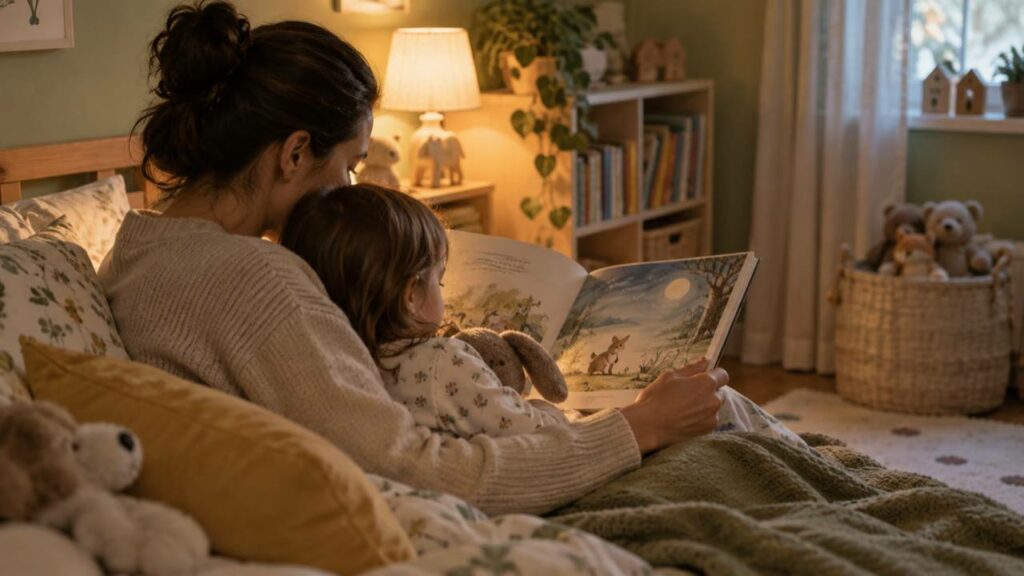
In Sun’s daily programme, the younger groups have time to sleep after lunch. It’s planned to be longer for the two-year-olds and shorter for the three-year-olds. For the four- and five-year-olds, the emphasis is on quiet rest and calm activities.
The principle in our parent handbook is the same for every group: children are offered rest, but never forced to sleep. A child who doesn’t sleep has a quiet activity to choose instead. Telling us about your child’s sleep at home helps us work out together what they need during the day. Our preschool nutrition guide looks at how meals fit into the day.
Does the Weekend Need to Look the Same?
Not down to the minute. But if weekends drift a long way from school days, Monday mornings can get harder. Keeping mornings and evenings roughly similar gives your child something they can predict.
If they didn’t nap over the weekend, it’s fine to mention it to the teacher on Monday. A long journey, an illness or a late night can change what a child needs that day too. A shared plan works best when everyone knows what’s changed.
If you’d like to talk about your child’s day and how much rest they need, you can arrange a visit. We’ll sit down together to talk through your questions.
References & Further Reading
- American Academy of Sleep Medicine — Recommended amount of sleep for healthy children: methodology and discussion.
Frequently asked questions
My four-year-old still naps. Does that mean they’re behind?
A daytime nap on its own isn’t a sign of developmental delay. Look at their total sleep and how they manage day to day. If they’re clearly struggling or unusually sleepy, talk to your doctor.
If I drop the nap, will they definitely sleep better at night?
Not every child reacts the same way. An overtired child can have a harder evening, not an easier one. Look at the day and the night together.
They sleep at school but not at home. Is that normal?
It can be. The setting, the routine and how busy the day has been all make a difference. Ask the teacher how long and how well they sleep, and think about it alongside their night-time routine at home.
Can I send a comfort toy for rest time?
Yes. At Sun, children can bring a comfort object or toy for rest time. It’s kept separate from the classroom’s everyday toys. Have a word with the teacher about what’s suitable and easy to keep clean.


This article is general information, not medical advice. The sources used are listed in the “Sources and Further Reading” section; talk to your doctor about decisions concerning your child.
