
Of all the questions parents ask on a preschool tour, the one about food is often the most heartfelt. You’re handing over not just your child’s mornings but their meals — and what a small child eats, day after day, quietly shapes how they grow, how they feel by mid-afternoon, and the eating habits they’ll carry for years.
This article is about what genuinely good preschool nutrition looks like — not a glossy sample menu, but the day-to-day reality: how the food is cooked, what goes into it, how allergies are kept safe, and the questions worth asking on a visit.
Why What a Child Eats All Day Matters More Than Any Single Meal
A preschooler is growing fast, and food is the fuel for all of it: steady energy for a long morning of play, the raw material for a developing brain and body, and — just as lasting — the palate and habits they’ll grow up with. A child raised around fresh, varied, lightly sweetened food comes to treat that as simply what “normal” tastes like.
The science is quietest but firmest on one point: sugar. Health bodies recommend keeping free sugars low in the early years, both for healthy weight and for young teeth. That’s less about banning the occasional birthday cake than about what fills the everyday plate — because it’s the everyday that adds up.
What a child eats on an ordinary day matters far more than any single meal.
What “Clean” Nutrition Actually Looks Like Day to Day
Behind the reassuring words on a menu, good nutrition is fairly simple and fairly boring — in the best way. It looks like real, whole ingredients cooked from scratch rather than reheated; plenty of vegetables and fruit; whole grains and honest protein; and very little processed food or added sugar. Drinks are water and milk, not juice. Meals are balanced across the day, and snacks are fruit and whole foods rather than packaged sweets.
None of that is exotic. What’s rare is a school that actually does it consistently, meal after meal, when no parent is watching.
Cooked On-Site or Brought In — Why It’s the First Thing to Ask
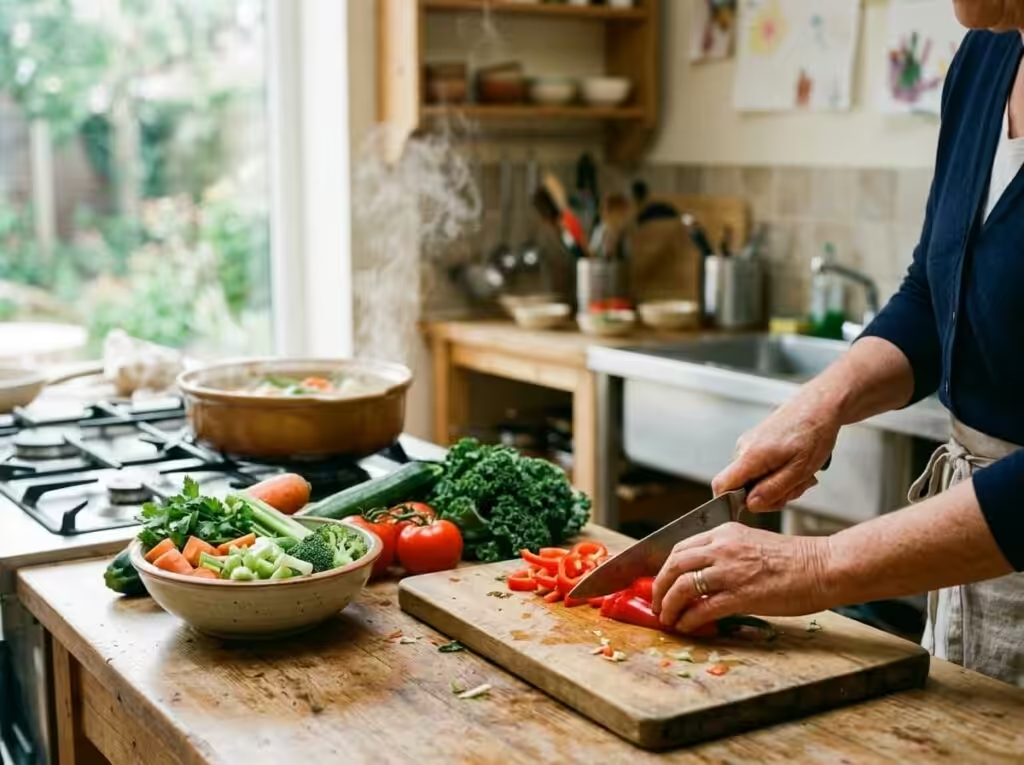
Whether food is cooked in the building or delivered from an outside caterer changes almost everything downstream. An on-site kitchen means fresher food, real control over ingredients and sugar, the flexibility to adapt a plate for a child with allergies, and a team you can actually talk to. Catered food can be perfectly fine — but you’re one step further from knowing what’s really in it, and adapting it safely gets harder.
So it’s worth asking plainly, and asking to see the kitchen. A school proud of its food will happily show you.
How a Good Preschool Keeps a Child with Allergies Safe
For a family managing an allergy, mealtimes are where trust is won or lost. “Probably fine” isn’t good enough. What you’re looking for is a real system: every child’s allergies documented, a clear process that cross-checks each plate against that record at the point of serving — not from a busy person’s memory — and staff trained to know exactly what to do. The details should be boringly precise. With allergies, boring is the goal.
Helping a Picky Eater — Without a Battle
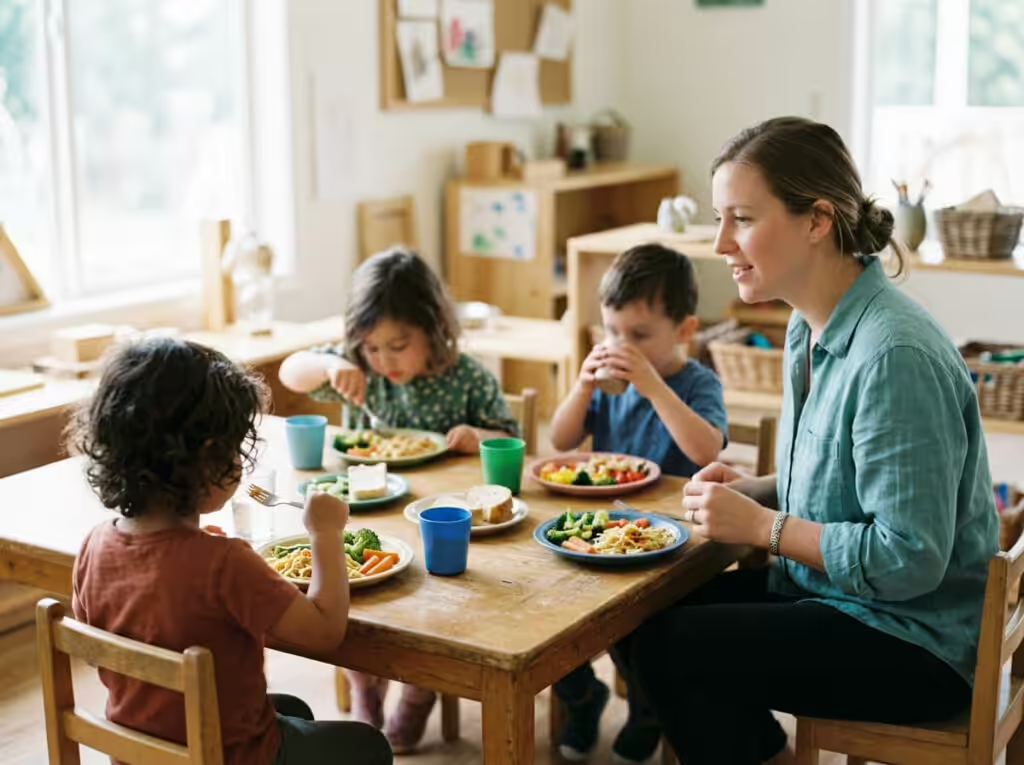
Almost every preschooler goes through a fussy stretch, and it rarely lasts. The approach that works is calm and unforced: offer good food without pressure, let the child decide how much to eat, and keep gently reoffering things they refused last week — it can take many low-key exposures before a food is accepted. Eating together helps enormously, because children copy what they see around the table. A good preschool leans on exactly this: shared mealtimes, no bargaining, no drama.
How We Think About Food at Sun Preschool
At Sun Preschool, food is cooked fresh in our own kitchen every day — not delivered, not reheated. We keep processed food and added sugar out of the everyday plate, make staples like yoghurt and kefir in-house, and pay attention to small details most people never think to ask about, down to the kind of teabags we avoid. And because allergies leave no room for “probably,” we cross-check every child’s allergies through a digital system at the point of serving, not from memory.
It’s the kind of care that’s hard to convey on a menu — which is exactly why we’d rather show you the kitchen than describe it.
The Takeaway: The Everyday Plate Is the One That Counts
You don’t need a nutrition degree to judge a preschool’s food. Ask where it’s cooked, look at an ordinary day’s meals rather than a showcase menu, check how allergies are actually handled, and notice whether sugar is the exception or the rule. Get those right and the rest tends to follow.
If you’d like to see — and smell — how we do food at Sun Preschool, come and visit. The kitchen is one of the first places we’ll take you.
References & Further Reading
- American Academy of Pediatrics (HealthyChildren.org) — Feeding & Nutrition Tips: 4- to 5-Year-Olds
- World Health Organization — Reducing free sugars intake in children
- Harvard T.H. Chan School of Public Health — Kid’s Healthy Eating Plate
Frequently asked questions
Are meals cooked on-site, or do you use catering and packaged food?
All our meals are cooked fresh in our own kitchen every day — we never use outside catering or ready-made food.
Our nutrition principles are clear:
- Apart from essential staples that must come packaged (such as milk, rice and legumes), no packaged food, junk food or boxed juice enters our school.
- We never cook with margarine; everything is prepared with butter, olive oil and sunflower oil.
- Many of our staples — yoghurt, kefir, ayran, dried fruit — are made in our own kitchen using natural methods.
And we keep a lovely tradition: fresh, homemade treats left over from the afternoon snack are happily shared with parents at evening pick-up.
How many meals do the children have each day?
Children enjoy three meals a day: breakfast, lunch and an afternoon snack.
Every meal is prepared fresh, that same day, in our own kitchen. The day begins at 09:00 with a relaxed breakfast together, followed by nourishing meals throughout the day that suit the children’s ages and needs.
My child has a food allergy — how do you manage it?
We manage allergies through a digital tracking system developed specially for our school.
The software cross-matches each child’s allergy profile against the ingredients of every dish cooked in our kitchen, and reliably prevents any allergen-containing food from reaching your child. The system is monitored simultaneously by parents, class teachers, our cook and school management.
Because ours is a boutique kitchen, preparing a fully separate menu for each child isn’t technically possible — but we work in close partnership with you and agree the safest solution together, including safe food brought from home when needed.
How do you vet your kitchen staff and ingredients?
Ask any school exactly this. A strong answer covers where meals are cooked (ideally on-site), how fresh the ingredients are, how allergies are tracked and cross-checked, and what training and health checks the kitchen team has. If a school can walk you through its food process in detail, that specificity is itself a good sign.