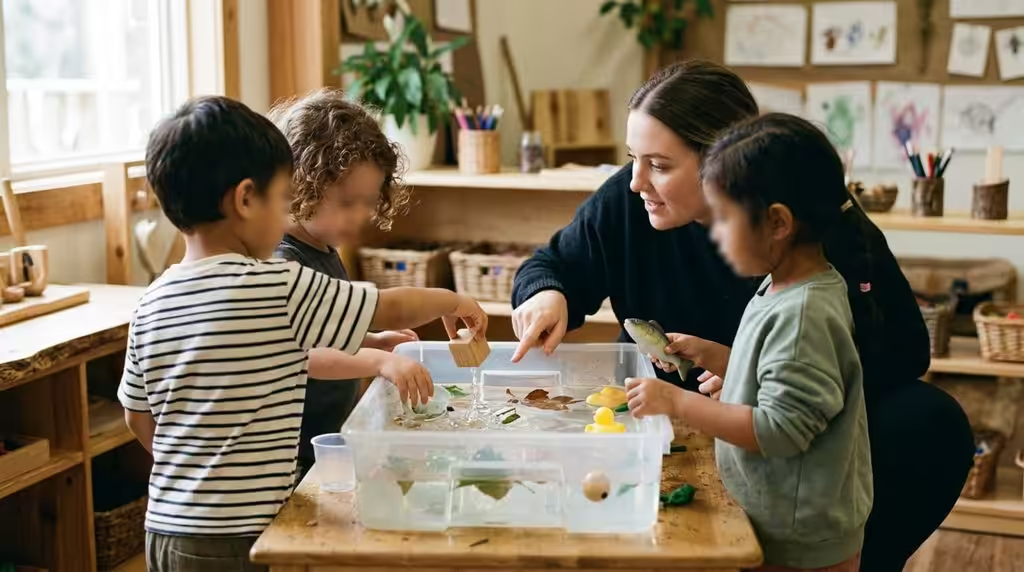
“Science and maths” and “preschool” can sound like an odd pairing — even a slightly worrying one, if it conjures worksheets and flashcards for four-year-olds. But early science and maths, done properly, look nothing like that. They look like a child dropping things in water to see what floats, sorting leaves by size, or noticing a pattern and grinning. They look like wonder.
This article explains what GEMS is, why science and mathematical thinking belong in the early years at all, and what they actually look like in a good preschool day — which is to say, like play with a little more purpose behind it.
What GEMS Actually Is
GEMS — Great Explorations in Math and Science — is a programme developed by the Lawrence Hall of Science at the University of California, Berkeley. Its whole approach is hands-on and inquiry-based: rather than telling children facts, it invites them to explore, predict, test and discover, with a teacher guiding the thinking through good questions. The activities are trial-tested and designed so that ordinary early-years teachers can run rich science and maths explorations well. In short, GEMS turns science and maths from things to be told into things to be done.
Why Early Science and Maths Belong in the Early Years
Long before formal lessons, young children are natural scientists and mathematicians — they classify, compare, count, predict and test the world constantly, just by playing. The point of early science and maths isn’t to push academics forward a few years; it’s to feed that instinct, build the thinking behind it, and keep curiosity alive. Done well, it develops observation, reasoning and problem-solving — the foundations that later, formal maths and science are built on — and, just as importantly, it teaches a child that these subjects are interesting and for them, which shapes how they’ll feel about them for years.
Early science isn’t facts to memorise — it’s a child’s natural curiosity, given something real to do.
What It Looks Like in a Preschool Day
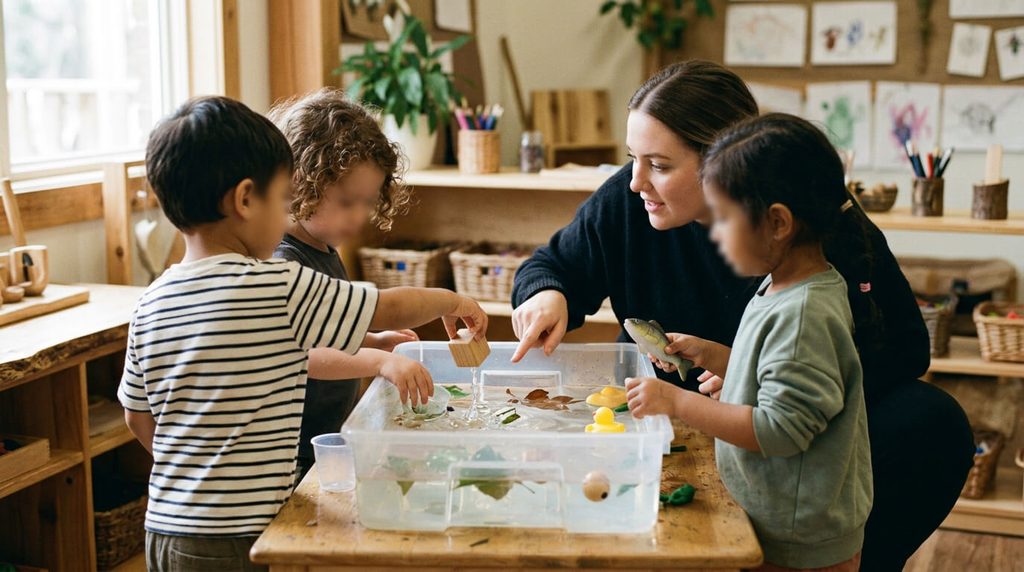
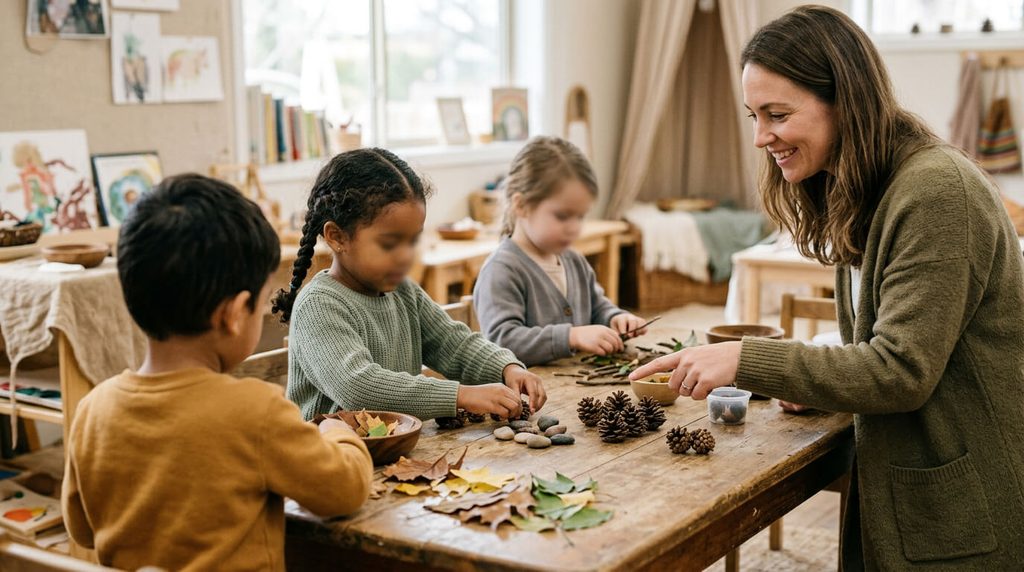
In practice it’s gloriously ordinary. Children test what floats and what sinks, and try to explain why. They sort and classify — by colour, size, shape — which is the root of mathematical thinking. They notice and make patterns, measure and compare, count things that matter to them, and watch how a plant grows or how water changes. A teacher’s job is mostly to ask the right question at the right moment: “What do you think will happen? Why? Shall we try it?” No worksheets required — just real materials, real curiosity, and someone skilled enough to guide it.
How We Use GEMS at Sun Preschool
At Sun Preschool, a hands-on science and maths strand runs through the week as part of our wider approach, which blends the national early-years framework, our English-intensive day, and enrichment from several traditions — something we explain in our guide to preschool teaching methods. GEMS-style exploration fits that perfectly: it’s curiosity-led, hands-on, and tied to real things children can see and touch. Our aim isn’t to produce tiny scientists on a schedule; it’s to keep the natural scientist every child already is switched firmly on.
You can see it best in the children’s faces mid-experiment — which is the part no brochure captures.
The Takeaway: Wonder First, Facts Later
Early science and maths aren’t about rushing four-year-olds into academics. Through an approach like GEMS, they’re about feeding a child’s natural curiosity with real, hands-on exploration — floating and sinking, sorting and counting, noticing and predicting — and building the thinking that formal learning will later rest on. If a preschool’s “science and maths” means worksheets, be wary. If it means wonder, real materials and good questions, that’s the real thing.
If you’d like to see what that looks like day to day, come and explore Sun Preschool with us.
References & Further Reading
- The Lawrence Hall of Science, University of California, Berkeley — GEMS: Great Explorations in Math and Science
- National Association for the Education of Young Children (NAEYC) — Math: It’s Important and Fun
- National Association for the Education of Young Children (NAEYC) — The Power of Playful Learning in the Early Childhood Setting
Frequently asked questions
Isn’t science and maths too advanced for preschoolers?
Not the way it’s meant here. Young children are already doing science and maths when they sort, count, compare and predict in play — an approach like GEMS simply gives that instinct real materials and good questions. It isn’t about advanced content or early academics; it’s about thinking and curiosity, pitched exactly at what a young child naturally does.
How is this different from just doing worksheets early?
Almost entirely. Worksheets ask a child to record an answer; hands-on early science asks them to explore, predict and discover with real materials. The GEMS approach is inquiry-led — children test what floats, why a pattern repeats, how a plant grows — which builds genuine thinking, whereas early worksheets mostly build a dislike of the subject. If a school leans on worksheets, that’s a warning sign, not a plus.
Does my child need to be “good at maths” for this to help them?
No — and that’s rather the point. This kind of early exploration is for every child, and one of its biggest benefits is that it helps a child feel that science and maths are interesting and for them, long before anyone is judged as “good” or “bad” at them. Feeding curiosity now is what makes the formal version easier and less daunting later.