“She can write her name, but she finds it hard to ask for help. Is she ready for primary school?” The answer doesn’t hang on any one skill. School readiness is about how a child joins in with learning, gets along with other people and copes with the everyday business of the day. Knowing some letters can matter, but so does being able to say what they need, trust an adult, and have another go when something is hard.
You don’t need your child to manage everything on their own before school starts. Getting ready begins with noticing what they can do with a bit of support, and then choosing the next small step together. A teacher’s observations, examples from family life and a school readiness assessment carried out by a psychologist can each help you understand what your child needs.
Why Readiness Is About More Than Reading and Writing
In Year 1, a child meets lots of new demands at once. They listen to the teacher, find their things, wait while a friend takes a turn, and say when they haven’t understood. These everyday tasks are what learning stands on. When the American Academy of Pediatrics explains school readiness, social and emotional skills are part of the picture too.
You can certainly feed an interest in reading: looking at books together, spotting signs when you’re out, playing with the sounds in people’s names. All good places to start. Looking at the letters your child is curious about is a very different experience from making them fill line after line. And a hand gets ready for writing through all sorts of movement: squashing play dough, drawing, cutting, and handling small objects with care.
What Can You Watch For at Home?
Don’t use the list below as a test. Collect examples from ordinary life, and instead of “can / can’t”, think “on their own, with a reminder, or with help”.
- Saying what they need: Can they tell you they’re thirsty, need the toilet, or haven’t understood?
- Listening: Can they follow a short instruction? Do they need more support when they’re tired?
- Getting along with others: Do they try to join in a game, and accept an adult’s help with taking turns?
- Handling feelings: When things don’t go their way, can they recover with time and support?
- Everyday independence: Do they recognise their own things, help with getting dressed, and have a go at tidying up?
- Movement and hands: Can they join in with drawing, sticking, ball games and balancing?
- Curiosity: Do they ask questions, and try a different way when something doesn’t work?
Don’t expect all of these to develop at the same pace. A child who loves to chat may still struggle with their coat; a child who’s clever with their hands may be quiet in a group. Think about examples from different days and different places, not just one morning.
How Small Everyday Jobs Help
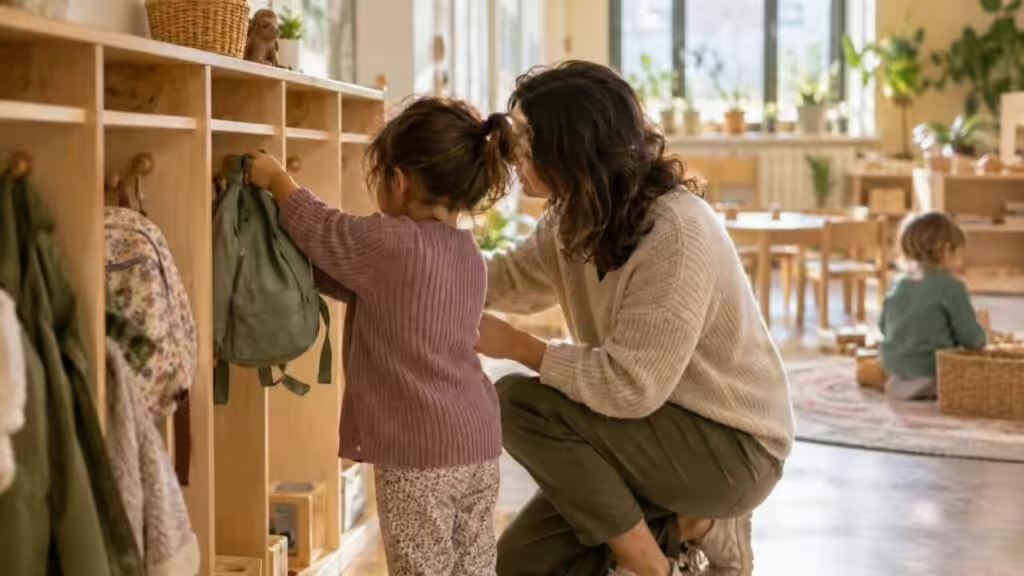
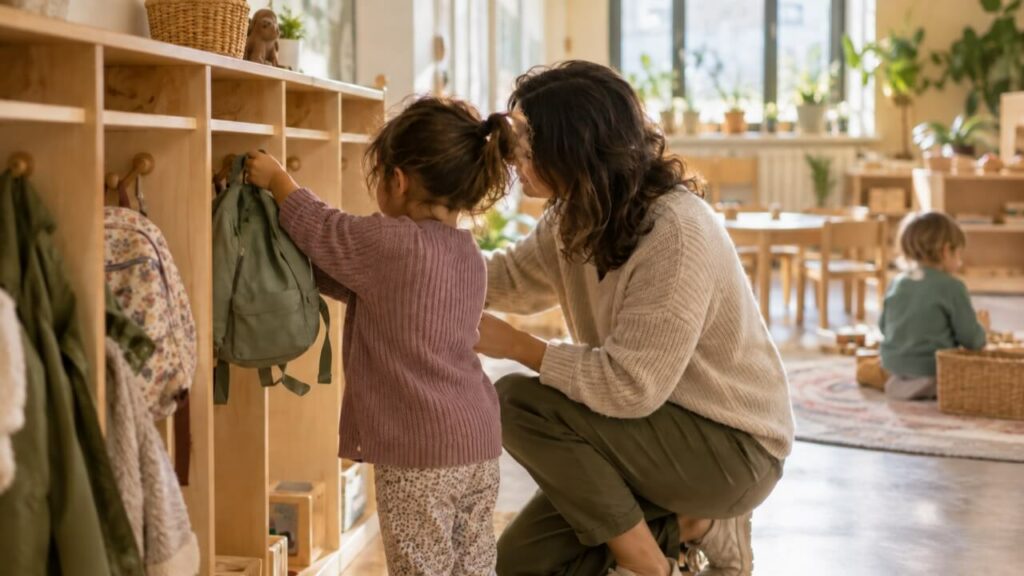
Giving your child a little extra time to do something they’re capable of is often more useful than a new workbook. They can put the napkins on the table, find their spare clothes in their bag, or choose between two games. When they get stuck, instead of finishing the job for them, try asking, “Which bit would you like help with?”
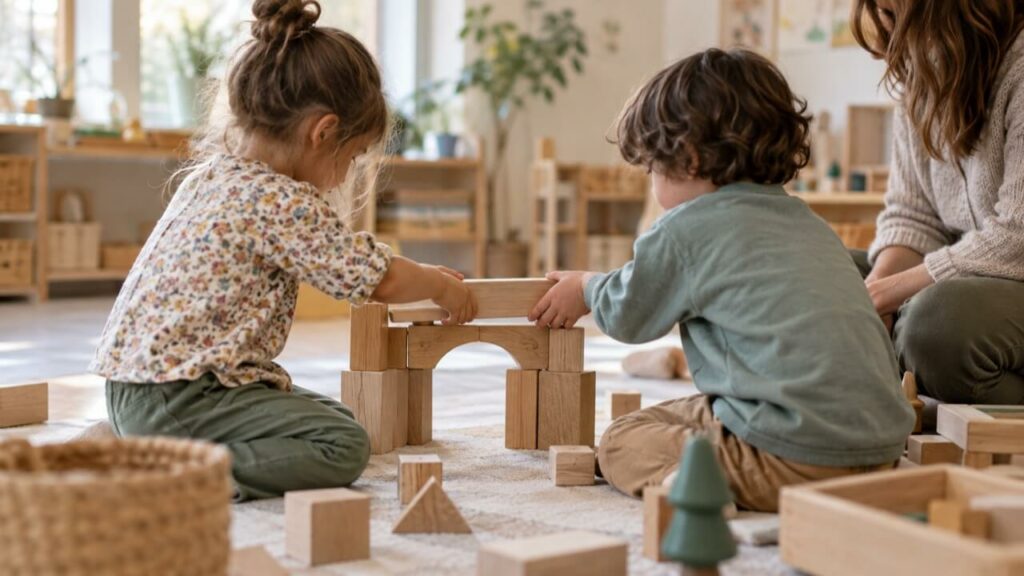
When you read together, let them tell you what they think is happening in the pictures. “What do you think happens next?” gives them room to explain their thinking. Playing shops, they might draw a shopping list; building with blocks, they might work out why a tower keeps falling down. This is where academic skills and everyday life meet. Our guide to play-based learning shows how the same connection is made in the classroom.
Disappointment is part of learning, too. When a tower falls down, saying “You’re sad, you worked so hard on that,” and then asking whether they’d like to try again, may be all that’s needed. Staying alongside them, rather than removing every difficulty, leaves room for them to find their own solution.
Being ready for primary school is not only about what a child knows. It’s about being able to ask for help when they don’t.
How We Think About Primary School Readiness at Sun Preschool
At Sun Preschool, we build readiness through play, conversation, movement and everyday independence. Our parent handbook is clear on this: we don’t prepare children for primary school by making preschool feel like primary school. Instead, we support their curiosity, their confidence and their part in looking after themselves.
Our school psychologist carries out the Metropolitan School Readiness Test (Metropolitan Okul Olgunluğu Testi) to assess readiness for primary school. This adds a structured look at skills needed for school learning alongside what we notice in the classroom and in everyday life.
When you meet your child’s teacher, rather than asking only which activities they’ve finished, ask for concrete examples: “What does she do when there’s a disagreement?”, “Who does he go to when he needs help?”, “How does she get started on something she’s chosen?” You’ll find more about this approach in our curriculum and in our guide to what preschool really does for a child.
What Does the Metropolitan School Readiness Test Assess?
The Metropolitan test looks at skills that help a child take part in learning at primary school. It has six sections: understanding words, understanding sentences, general knowledge, matching, numbers and copying. These give information about skills such as understanding what is said, recognising similarities, working with numbers and copying a shape onto paper.
The result is one part of the readiness picture. Friendships, managing feelings, asking for help and everyday independence also need to be understood through observations at home and in the classroom. When you discuss the result with our school psychologist, look beyond the total score to your child’s strengths and the skills they may need help with. You can also ask about the timing of the assessment and how it applies to your child.
Agreeing the Next Step With the Psychologist and Teacher
Go to the meeting with two things your child does well and one situation they find hard. “She has a short attention span” is less useful than “At home she’ll keep going with a game she loves; in a group she needs a second reminder to follow an instruction.” Put what the teacher sees alongside what you see. If your child has had the Metropolitan assessment, ask the school psychologist, “How does this fit with what we see day to day?” and “Which skill can we support at home and at school?”
Then pick just one goal, such as asking for help or getting their coat ready. Agree how you’ll each support it, and when you’ll talk again. If your child has particular support needs, ask how the school will adapt the setting for them too. Readiness is as much about how a school gets ready for the child as the other way round.
Keep questions of age and registration separate from what you’re noticing about your child’s development. Our guide to preschool and primary school starting ages explains the registration options; this article doesn’t make a decision about deferring for you.
If you’d like to talk about your child’s strengths and what they’ll need before primary school, you can book a tour of Sun Preschool.
References & Further Reading
- American Academy of Pediatrics (HealthyChildren.org) — Is your child ready for school? Social, emotional and everyday skills. Written for the US school system.
- NAEYC — Planning for individuality: shaping the preschool setting around each child’s needs.
- Milli Eğitim Dergisi — Research on preschool education and school readiness (in Turkish). Describes the six sections of the Metropolitan test.
Frequently asked questions
Does my child need to be reading before primary school?
Reading on its own isn’t a measure of readiness. An interest in books, talking, listening and everyday independence all matter too. If your child is keen to read, encourage it, but don’t turn it into compulsory homework.
Could a shy child not be ready for primary school?
Shyness on its own doesn’t mean a child isn’t ready. Look at whether they communicate with an adult they trust, and whether they join in over time. Meeting the teacher beforehand and a predictable start to the day can help.
My child holds a pencil in an unusual way. Is that a problem?
Hand skills develop with age and practice, so don’t judge on one grip. If there’s pain, obvious strain, or they keep avoiding drawing and everyday hand tasks, talk to your paediatrician. Offer lots of different hand games rather than long writing practice.
Does Sun Preschool carry out a school readiness test?
Yes. Our school psychologist carries out the Metropolitan School Readiness Test to assess readiness for primary school. You can talk to our psychologist about when it is carried out, what it covers and your child’s result.
Can the Metropolitan test tell me on its own whether my child is ready?
It gives information about some skills needed for school learning, but a score cannot explain everything your child needs. The teacher’s observations and examples from home also matter, especially for social and emotional skills and everyday independence. Discuss the result with the school psychologist, and consider age and registration requirements separately.