“If he’s still in nappies by registration, does that mean he can’t start?” When toilet learning coincides with starting preschool, families can feel under pressure. Being fully toilet trained isn’t a universal entry requirement for preschool, so ask each school what theirs is. And for children who are still in nappies, having their care needs met is simply part of the day.
Learning to use the toilet doesn’t happen with one decision. A child has to notice the signal from their body, stop what they’re playing, ask for help and manage their clothes. These skills don’t all arrive at once, and turning a registration date into a finishing line usually makes the whole thing harder.
How Can You Tell Your Child Is Ready to Start?
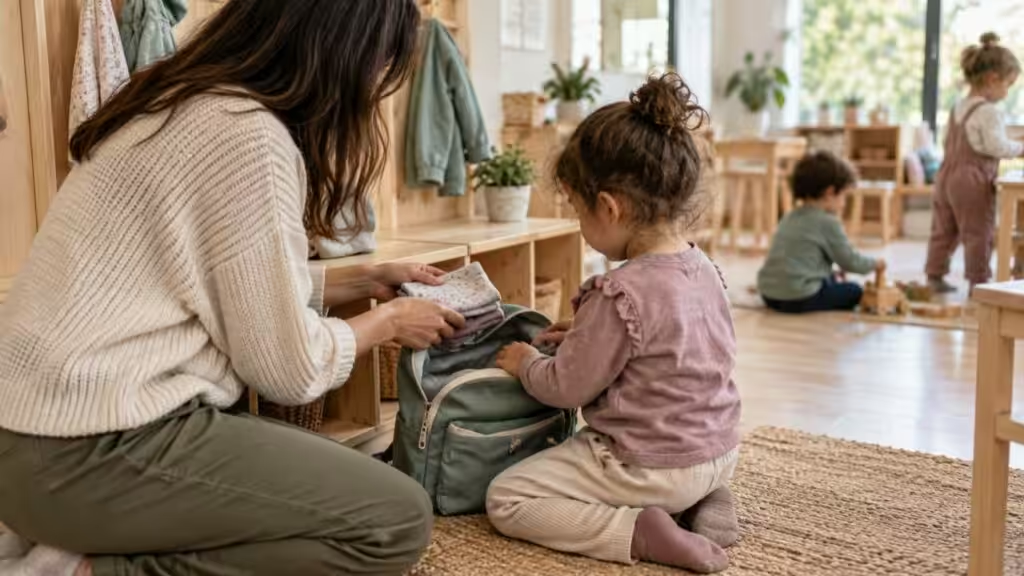
Age gives you a rough idea, but it isn’t enough on its own. The American Academy of Pediatrics’ guide to when to start toilet training suggests looking at physical signs and everyday skills together.
Things you might begin to notice:
- They tell you their nappy is wet or dirty.
- They give a sign before they go, such as stopping still, squatting or using a word.
- They can follow a short instruction.
- They help pull their trousers down and up.
- They’re curious about the potty or the toilet.
- They stay dry for stretches of the day.
This isn’t a checklist to pass. Your child may be curious but still need help with their clothes. They may use the toilet at home and hold back at preschool. That doesn’t mean they’ve forgotten what they learned; they may just need time to get to know the new place. If you are thinking about the later transition, our guide to primary school readiness explores that separately.
Do We Have to Start at the Same Time as Preschool?
When life is changing, with a house move, a new baby or a first experience of school, a familiar routine is precious. If you’re thinking about starting a new toilet routine, talk to the teacher about where your child is now. For one family, a few gentle tries before preschool starts may be right; for another, it may be easier to let their child settle in first.
Instead of saying things like “You’re a big boy now, no more nappies,” give simple explanations about their body. “When you need a wee, you can tell me and we’ll go together” shows your child what to do. Sitting them on the toilet for a long time, comparing them with other children, or punishing accidents won’t help them learn.
Our guide to settling in at preschool covers how to support separation and new routines during the same period. Treating toilet learning as part of that bigger picture is far gentler than trying to rush both at once.
How Can Home and Preschool Speak the Same Language?
Rather than telling the teacher “We’ve started potty training,” give them a few specifics. Which word your child uses when they need to go, whether they use a potty or the toilet, what makes them anxious, and how you help them are all far more useful.
Together, you can agree on:
- The words you use: Share the simple phrases your child already knows.
- How to remind them: Offer gently at natural changes in the day, rather than asking all the time and interrupting play.
- Clothes: Choose comfortable things that are easy to pull down and up.
- Spares: Keep a full change of clothes ready in their bag.
- Keeping each other posted: Tell the teacher about a new difficulty or a noticeable change.
If your child is in a nappy one day and pants the next, say so openly. Don’t assume one method suits everyone. Build a shared approach by watching what your child understands and where they need help. For another situation that calls for home and school to work together, see how to respond when a child bites at preschool.
What Should You Say When There’s an Accident?
A short, calm sentence is enough: “Your clothes are wet; let’s get you changed.” Your child may already feel uncomfortable or embarrassed. Skip the long explanation, the “Not again?” and any discussion in front of their friends, and just help them get clean and comfortable.
Later, at a calm moment, you might try, “How could you tell me next time you need to go?” But you don’t need to turn every accident into a lesson. Repetition and adult support are an expected part of learning.
When learning to use the toilet, children need to know they are safe and supported even when they have an accident.
How We Support Toilet Learning at Sun Preschool
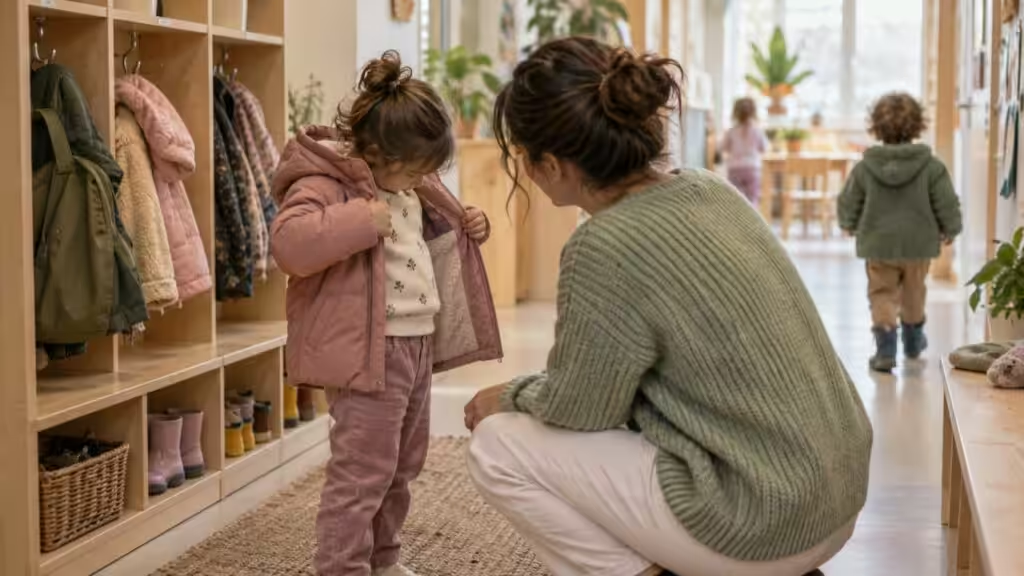
At Sun Preschool we welcome children from 24 months. Your child does not need to be toilet trained to start at Sun Preschool. Our parent handbook asks families to keep nappies and wipes at school for children who need them, and to send a spare change of clothes every day.
Care should come from your child’s own teacher, who knows them. Their privacy should be protected, and the teacher should calmly explain what is happening. An accident is never something to be ashamed of. If you tell us about your routine at home at our first meeting, it helps us plan the right supplies and support for day one.
When Should You Talk to Your Paediatrician?
If your child has pain when doing a poo, hard stools, holds on for long periods, or is clearly frightened of the toilet, don’t just wait and assume they “haven’t got used to it yet”. Constipation and pain can make learning harder, and it’s a paediatrician’s job to assess them. Pain when weeing, or a clear change in a skill they’d already mastered, is also worth a visit.
Share what the teacher has noticed: when it happens, how often, and how your child’s behaviour changes. That information is useful, but it isn’t the school’s job to diagnose or suggest treatment.
If you’d like to talk about how we’d support your child at their own pace, you can arrange a visit.
References & Further Reading
- American Academy of Pediatrics (HealthyChildren.org) — The right age to toilet train: signs of readiness.
- American Academy of Pediatrics (HealthyChildren.org) — Creating a positive, child-led toilet training plan.
Frequently asked questions
Can I register my child for preschool if they’re still in nappies?
That depends on each school’s admission requirements, so ask directly before you register. At Sun Preschool there’s no requirement to be toilet trained. Tell the teacher what supplies your child needs and the care routine they’re used to.
He’s dry at home but has accidents at preschool. What should I do?
A new toilet, new adults or simply being absorbed in play can make a difference. Rather than questioning your child, talk to the teacher about the moments they find hard. Short reminders and familiar words can help.
The rest of the class has started. Should we start too?
Seeing friends use the toilet can spark interest, but it isn’t the same as being ready. Follow your child’s own signs. Other children’s pace doesn’t set a deadline for yours.
Does toilet training have to be done in a few days?
No. How long it takes, and how much support a child needs, varies. Rather than chasing promises of a set timeframe, look for comfort, body awareness and day-to-day progress. If pain or difficulty goes on, talk to your paediatrician.