

“What did you do today?” “Nothing.” If that’s how the walk home from the school gate usually goes, it can leave you wondering what really happened all day. But for a young child, summing up a whole day is a big ask. Starting from one small detail, and waiting for the right moment, often makes the conversation much easier.
Some children chat on the way home. Others suddenly start talking while you’re making dinner or just before bed. You don’t need a full report every time you collect them. First, make room for being back together, and for whatever your child needs in that moment.

Why Is “What Did You Do Today?” Such a Hard Question?
Your child has been through lots of games, meals and changes of activity. To answer, they have to pick one, remember it and find the words for it. If they’re tired, or their mind is already on something else, “I don’t know” is the easiest reply.
Making the question smaller helps: “What did you build in the block corner today?” or “Which book did your teacher read?” An object, a drawing or a note from the teacher can also help them remember. The answer may still be short, and that’s fine. It’s an invitation to talk, not a test.
The American Academy of Pediatrics’ guidance on good communication in families stresses listening carefully and making time to talk. How you receive your child’s answer matters more than how many questions you ask.
How Can You Make Room for a Chat?
If your child is hungry or thirsty, deal with that first. Walking side by side, drawing or playing together often feels easier than a face-to-face grilling. It also helps to put your phone away for a while and really listen to the small answer they do give.
Sharing a moment from your own day (“Guess what happened to me today…”) turns it into a two-way conversation. You don’t need to describe your whole working day; a funny detail or a small hiccup is plenty.
If they don’t answer, don’t jump straight to the next question. You can wait a little, change the subject, or come back to it later. Try not to turn their school day into the family’s daily debrief. If being reunited brings a tantrum, start with how to support your child through intense feelings.
Questions That Help Children Remember Their Day
Pick one or two of these. Don’t ask them all on the same day: adapt them to your child’s age, their interests and anything you already know about their day.
- Did anything make you laugh today?
- Which game did you spend the most time on?
- If you built something with the blocks, can you show me what it looked like?
- What did you notice when you were outside today?
- What was in the pictures of the book your teacher read?
- What did you play with a friend?
- Who did you help today, or who helped you?
- Was anything tricky today? What did you do then?
- Can you show me the actions to one of the songs?
- What was there to eat at lunch?
- Did you try anything new today?
- When you were playing, what did you plan first, and what changed?
- Is there anything you’d like to do again tomorrow?
- Where did you go when you wanted a quiet rest?
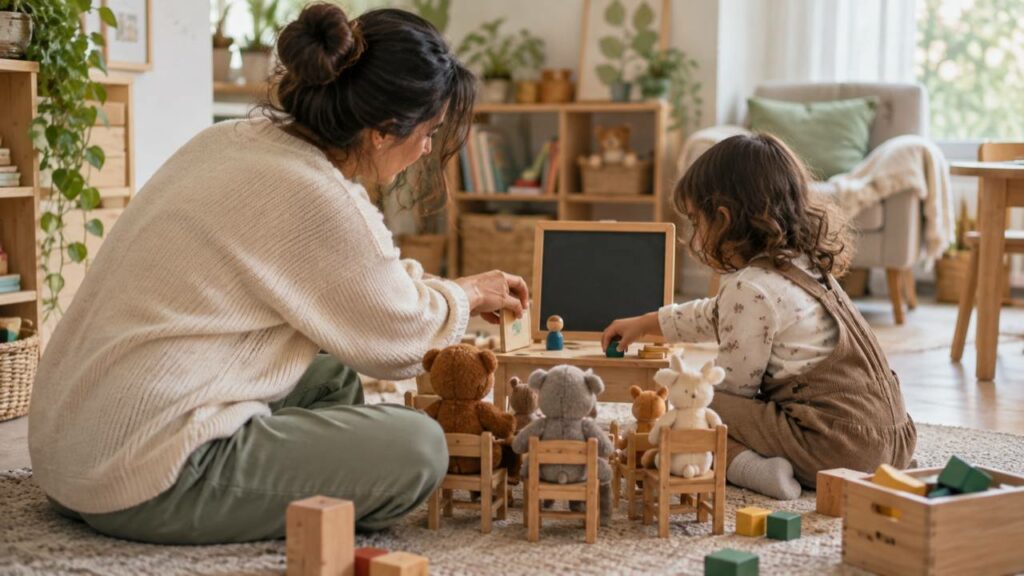
- Would you like to draw something that happened today, or act it out with your toys?
“No” is an answer too. Be especially careful with questions about friends and feelings: don’t ask them as if you already know the right answer. Ask out of curiosity, and let your child use their own words.
What If You Only Get a Short Answer?
If they say “We went outside,” you might open it up once: “What did you do outside?” Then connect it to something you’ve noticed yourself: “There’s a bit of mud on your shoes. Were you digging somewhere?” Just don’t present your guess as if it’s a fact.
When they do tell you something, listen first rather than adding a lesson or a verdict. Reflecting it back (“Sounds like you really enjoyed that”) is often enough. If something needs sorting out, you can offer: “Would you like us to think about it together?”
How to Use Photos and Daily Notes
Pick out one detail in a photo: “Did you make this road?” If your child corrects you, go with their version. Remember that a photo shows a single moment; it doesn’t explain the whole day.
Don’t decide your child didn’t join in just because they aren’t in a picture. And try not to use other children’s names or behaviour as a point of comparison. Use the photo as a starting point for hearing about your own child’s experience.
A child’s day often opens up not when you find the perfect question, but when they find a comfortable space to tell it.
Sun Portal: A Link Between Home and School
At Sun Preschool, daily notes and photos are shared through Sun Portal, our parent app. They give you something concrete from the day to start with. You can also send your child’s teacher a quick question, such as “Which game would be a good one to ask about today?”
What the teacher tells you shouldn’t be used to correct your child’s version of events. Rather than saying “Your teacher told me, so you’ve got it wrong,” sort out any differences between the adults. Communication between home and school shouldn’t depend on your child giving a report.
When Should You Look More Closely?
If your child shows a new and strong fear of going to school, a marked change in sleep or behaviour, or tells you something that suggests they’ve been hurt, talk to the teacher and the school’s leadership without delay. Use open questions that don’t lead them, and write down what they say, in their own words as far as you can.
Don’t try to solve a safety worry just by finding better questions to ask. The adults involved need to share concrete information and what they’re doing about it. If there’s an ongoing difficulty with development or anxiety, get support from the right professional. For worries about the early days, see our guide to settling into preschool; for the decision to begin, see signs that a child is ready to start.
If you’d like to talk about how you can keep up with your child’s day at preschool, you can arrange a visit.
References & Further Reading
- American Academy of Pediatrics (HealthyChildren.org) — Components of good communication: listening and healthy communication in the family.
- NAEYC — Listen, talk, answer: supporting your child’s learning.
Frequently asked questions
If my child never talks about school, does that mean they don’t like it?
Not on its own. Some children simply don’t enjoy going into detail, or they talk about it at a different time. Think about how they seem in general and what the teacher has noticed.
Should I keep asking the same question?
Asking again and again can start to feel like pressure. Start with one small detail and give them time to answer. If they don’t want to talk right now, try another moment later.
My child only ever tells me about their friends. Is that enough?
Friendships are a big part of a child’s day. Listen to those stories, and now and then invite them to tell you about other things too. They don’t need to cover everything every day.