For most parents, safety isn’t one worry among many — it’s the one underneath all the others. You can weigh curriculum and language and food with a clear head, but “will my child be safe here?” sits somewhere deeper, and it’s the hardest thing to judge from a friendly tour and a nice brochure.
This article is about how to read a preschool’s safety honestly: what real safety actually looks like (hint — it’s quiet systems, not slogans), the questions worth asking, and how to tell reassuring care from a reassuring performance. Not a technical checklist, just the things that genuinely matter.
Real Safety Is Systems, Not Slogans
Any school can say “your child’s safety is our top priority.” The words cost nothing. What actually keeps children safe is unglamorous and specific: clear routines that happen the same way every day, staff who know exactly what to do, and records that don’t rely on anyone’s memory. When you visit, listen for that specificity. A school that can calmly walk you through how things work — arrival, allergies, emergencies — is usually a safe one. A school that only offers reassurance is asking you to take it on faith.
Real safety is quiet and specific — systems that work the same way every day, not a promise on a wall.
Who’s With the Children — and Are There Enough of Them
Safety starts with the adults in the room. It’s worth knowing that staff are trained in paediatric first aid, that there are genuinely enough of them for the number of children (a low ratio isn’t just about attention — it’s about eyes on every child), and that the team is stable rather than a rotating cast. Our wider checklist for choosing a good preschool goes deeper on ratios and staffing; for safety specifically, ask who is with the children, how many, and what training they hold.
Arrival and Collection: The Most Important Daily Routine
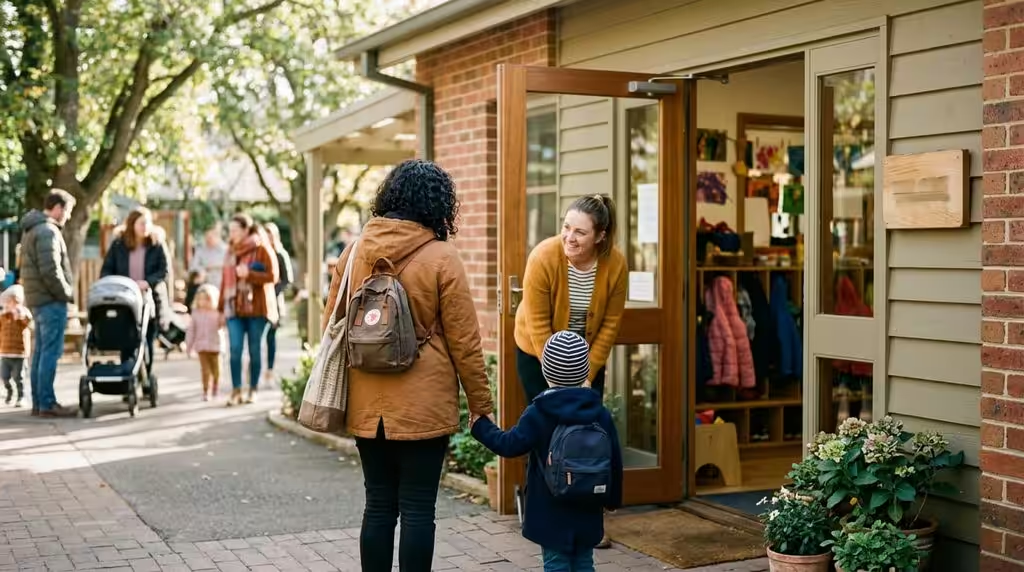
If there’s one safety system to ask about, it’s this: how does the school control who comes and goes, and — above all — who is allowed to collect your child? A serious setting has a clear, documented handover process, an authorised-pickup list, and staff who will politely check rather than assume. It can feel almost fussy in practice. That fussiness is the point; the day you’re glad of it is the day someone unexpected turns up at the gate.
Health, Allergies and Emergencies
Everyday safety is also about health. Ask how the school manages medicines, illness and hygiene, and — if it’s relevant to you — how allergies are tracked and cross-checked at mealtimes, which we cover in our guide to preschool nutrition. Then ask the question no one enjoys asking: what happens if a child is hurt or falls ill? A good school will answer plainly — first-aid-trained staff on hand, a clear emergency plan, and a promise to contact you straight away — without either brushing it off or turning it into theatre.
Safe, but Not a Fortress
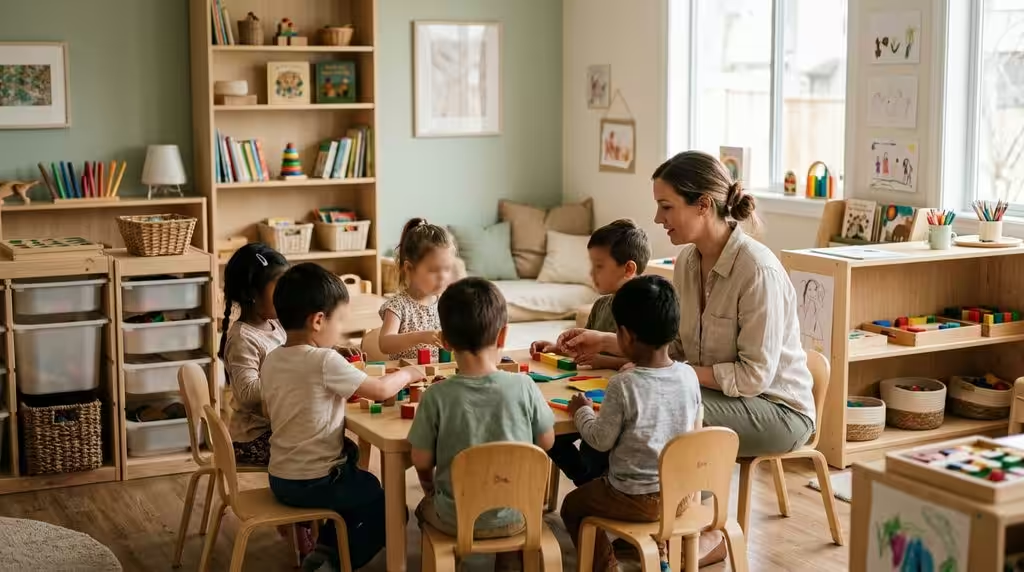
Here’s the balance a good preschool holds: genuinely safe, but not so locked-down that children can’t be children. Real safety isn’t about wrapping a child in cotton wool or turning a school into a fortress of cameras — it’s about removing genuine hazards while still letting children climb, explore and take the supported risks that help them grow, which we make the case for in our guide to outdoor learning. A school that has eliminated all risk has usually eliminated a lot of the learning too. What you want is careful, not fearful.
How We Approach Safety at Sun Preschool
At Sun Preschool, safety is built into the ordinary day rather than bolted on. Our staff are trained in first aid, our arrival and collection follow a clear, documented process so we always know who is handing over and collecting each child, and our health and allergy information is recorded and checked rather than remembered. We keep the environment genuinely secure while still giving children real room to move, play and explore — because a child should feel safe and free, not watched.
We’d rather show you exactly how this works than list it, and we’re always happy to answer the hard questions directly.
The Takeaway: Ask for the “How”
You don’t need to become a safety inspector. On any tour, gently ask how — how arrival and pickup work, how many trained adults are with the children, how allergies and emergencies are handled. The schools that answer calmly and specifically are usually the safe ones. And trust your instincts: a place that feels secure, warm and unhurried usually is.
If you’d like straight answers to any of these questions, come and visit Sun Preschool — ask us anything.
References & Further Reading
- American Academy of Pediatrics (HealthyChildren.org) — Why Quality Matters in Early Child Care & Preschool
- National Resource Center for Health and Safety in Child Care — Caring for Our Children: National Health and Safety Performance Standards
- Childcare.gov (U.S. Office of Child Care) — Keeping Children Safe
Frequently asked questions
What’s the single most important safety question to ask on a visit?
Ask how the school controls who can collect your child, and what happens if someone not on the authorised list turns up. Everyday safety lives or dies on that handover routine, and the way a school answers — specific and confident, or vague and reassuring — tells you a lot about how seriously it takes the rest.
Should I expect cameras, and will I be able to see the footage?
Monitoring can be one useful layer of safety, but it isn’t the whole story, and policies on parent access vary and are shaped by other children’s privacy too. Don’t judge a school by cameras alone — a well-trained, well-staffed team following clear routines matters far more than a screen. Ask how they actually supervise children day to day, not just what hardware they own.
How do you handle it if a child gets hurt or falls ill?
Look for a plain, practised answer: first-aid-trained staff on site, a clear emergency plan, and a commitment to contact you straight away. A good school neither downplays the question nor performs it. If the response is specific and calm, that steadiness is usually exactly what you’d want in a real moment.