If you feel a flicker of doubt about putting your child into a bilingual preschool, that’s a completely normal place to start. The worry parents bring to us most often is almost always the same one: won’t two languages at once confuse them? Will their Turkish suffer?
It’s a fair question, and it deserves a straight answer. So here’s what the research on child language development actually says about how a second language affects a child’s first, what’s really going on behind the most common worries, and what to look for so both languages grow up strong.
The Short Answer Is No — But It’s Worth Seeing Why
Children who grow up with two languages in a healthy, balanced way don’t fall behind in their mother tongue. Decades of research point the same way: meet a second language early, and a child can build both languages soundly.
It comes down to how flexible a young child’s mind is. A child’s brain is wired to run two languages at once — it doesn’t have to give ground in one to make space for the other. It helps, too, to remember that most of the world grows up with more than one language. Bilingualism isn’t some unusual experiment; it’s one of the most ordinary things human beings do.
The word that carries all the weight here is balanced. Most of the worry comes not from bilingualism itself but from how the language reaches the child. So let’s take the three most common concerns one at a time.
“My Child Mixes the Two Languages” — Is That a Problem?
Every so often you’ll catch a bilingual child blending both languages in one sentence — dropping an English word into the middle of a Turkish one. It’s easy to read that as confusion.
It isn’t. Linguists have a name for it — code-switching — and far from being a problem, it’s a natural and even clever stage of bilingual development. The child reaches for whichever word lands first, or fits best. That’s not a sign they can’t tell the languages apart; it’s a sign they can get to both. Give it time, and as they work out which language belongs where, they sort it out on their own.
Mixing the two languages isn’t confusion — it’s a child reaching for the best word they have in either.
“Will Their Turkish Fall Behind?”
Underneath this one is usually a specific fear: will my child start speaking Turkish as quickly as the children their age who only have one language?
Bilingual children hit the big milestones — first words, first sentences — right on the normal timetable. It’s true that, at a given age, their vocabulary in one language on its own can look a little smaller than a monolingual child’s. But that’s a bit of a trick of the light: count the words they have across both languages and bilingual children are at least keeping pace with their peers. The apparent gap is just the same idea learned twice, in two languages, and it closes over time.
Some children also go quiet for a while when a new language arrives — a “silent period” where they listen and take it in before they start speaking it. That’s not them going backwards; it’s a healthy part of picking the language up.
So: in a balanced setting, Turkish doesn’t lose out. The question is what makes a setting balanced.
What Actually Matters: Quality and Consistency
Whether a second language turns out to be a gift or a struggle has very little to do with the language itself and almost everything to do with how it’s taught. A few things make the difference:
Both languages need real feeding. For a mother tongue to stay strong, Turkish has to keep flowing — plentiful, high-quality, and full of warmth — at home and at school. Bilingual education doesn’t mean easing off the first language; it means both languages getting stronger alongside each other.
Language has to come in a real, steady context. Children learn a language for keeps when they live it — in play, in conversation, in the rhythm of the day. We go further into the gap between a language “taught as a lesson” and one picked up by living in it in our guide to when and how children start learning English.
The people delivering it are what tip the balance. The adults teaching the language need more than fluency — they need to understand how children acquire language and how they develop. That’s the whole difference between a well-run bilingual programme and a loose “English hour.”
Balanced Bilingual Development at Sun Preschool
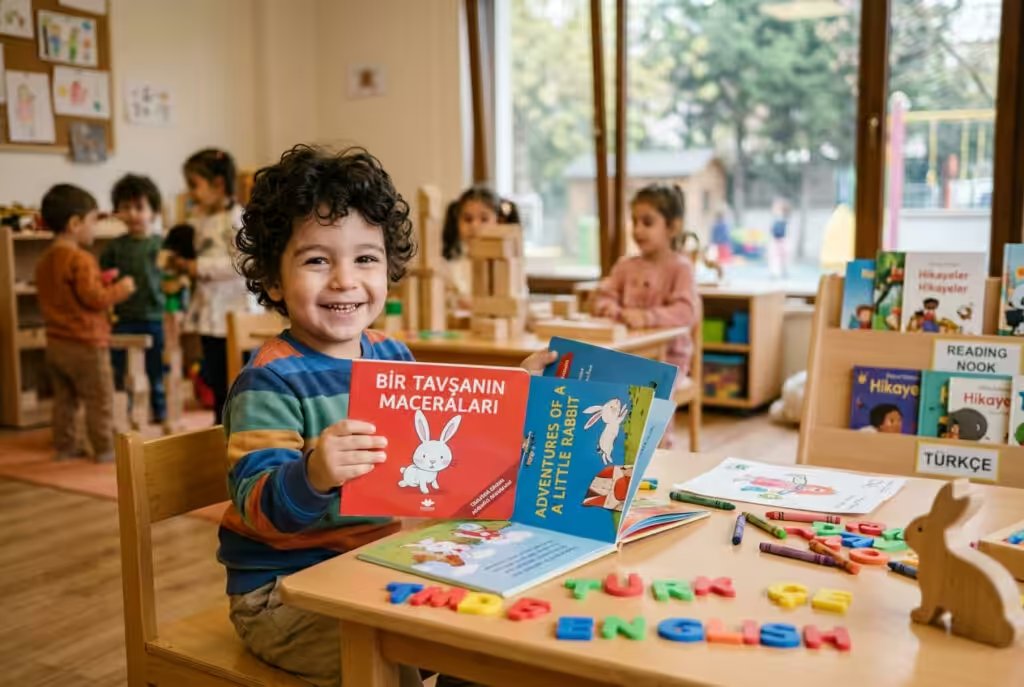
At Sun Preschool, the principle we start from is simple: English is added alongside Turkish, never in its place. The children’s mother tongue keeps growing on a strong Turkish footing, and English joins it as a natural part of the day.
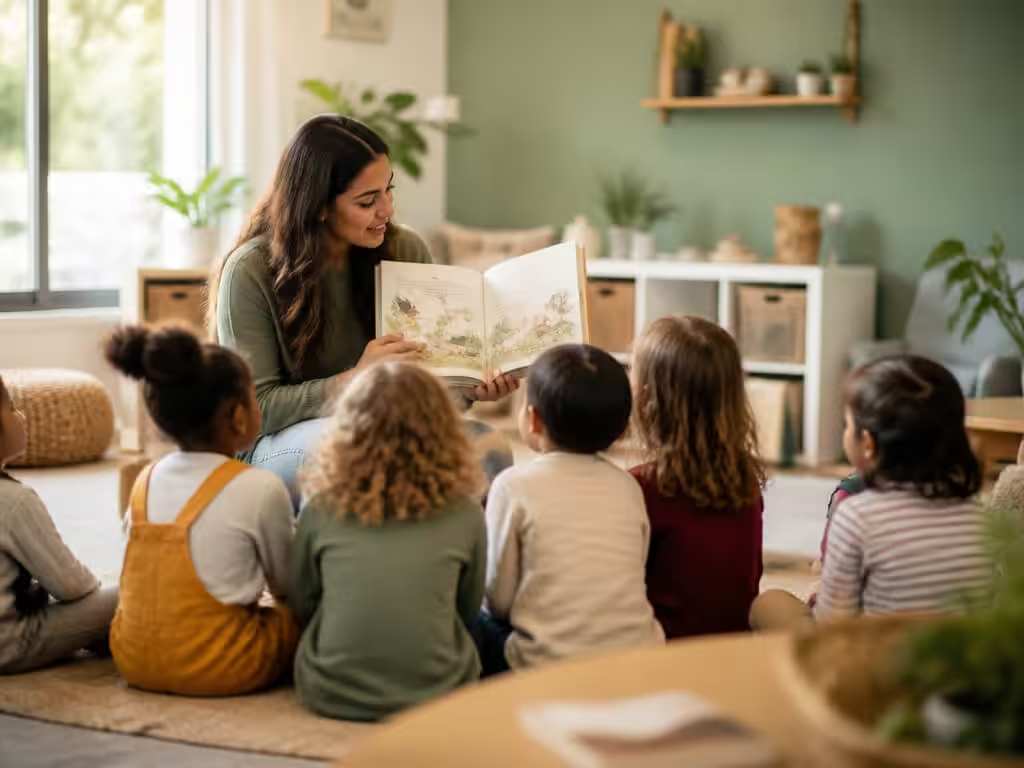
The way our teachers share the classroom is what makes that possible — our children spend the whole day somewhere they meet both Turkish and English steadily, meaningfully, and at the right level for their age. The two languages aren’t in a tug-of-war; they grow together.
Our English programme is led by educators with real depth in language acquisition and child development. What we’re after is children who hold both languages with an easy, natural confidence — and no muddle.
The Takeaway: Decide from Knowledge, Not Worry
Done well, bilingual education doesn’t weaken a child’s Turkish — it lays a foundation where both languages come up strong. What counts is the quality of the language, the consistency of it, and both languages being genuinely valued.
If you’d like to see how a bilingual setting actually works for a child, we’d be glad to show you how Turkish and English live side by side, day to day, at Sun Preschool. Get in touch to arrange a visit.
References & Further Reading
- American Speech-Language-Hearing Association (ASHA) — Learning More Than One Language
- Bilingualism: Language and Cognition (Cambridge University Press) — Code-switching as a marker of linguistic competence in bilingual children
- Byers-Heinlein, K. & Lew-Williams, C. — Bilingualism in the Early Years: What the Science Says
Frequently asked questions
My child doesn’t speak any English — will they struggle?
No — our immersion approach assumes no prior English at all.
Children acquire English the same way they learned their mother tongue: by listening, playing and living the language in the natural flow of the day. There is no memorization and no pressure; each child absorbs the language at their own pace, feeling safe and confident. Starting school with zero English is never a disadvantage here.
How much English do the children actually get?
We don’t measure English in weekly lesson hours — we run a bilingual model that lasts all day.
- Ages 2–3: Children spend the entire day with their English teachers alongside their class teachers, acquiring the language naturally, just as they do their mother tongue.
- Ages 4–5: Around two-thirds of the day runs bilingually; for the remaining part, children work only with their English teachers, strengthening their active speaking skills.
To protect children’s expressive strength in their mother tongue and their cultural roots, most of our specialist classes are held in Turkish.
Does code-switching mean my child is confused?
No — if anything, it’s the opposite. When a bilingual child drops a word from one language into another, they aren’t muddling the two; they’re reaching for the best word they have across both. Linguists treat code-switching as a normal, even skilful, sign of bilingual development. It sorts itself out as children learn which language fits which setting.
My child’s Turkish vocabulary seems smaller than their friends’ — should I worry?
Usually not. At any given moment a bilingual child’s words are split across two languages, so one language on its own can look a little behind. Count both languages together and they’re typically keeping pace with their peers. The gap is really the same idea learned twice, and it closes with time.
Should we drop Turkish at home to boost their English?
No — and it can backfire. A strong mother tongue is the foundation a second language builds on, not competition for it. Keep Turkish rich and loving at home and let the preschool provide steady English. The two grow best side by side, not at each other’s expense.