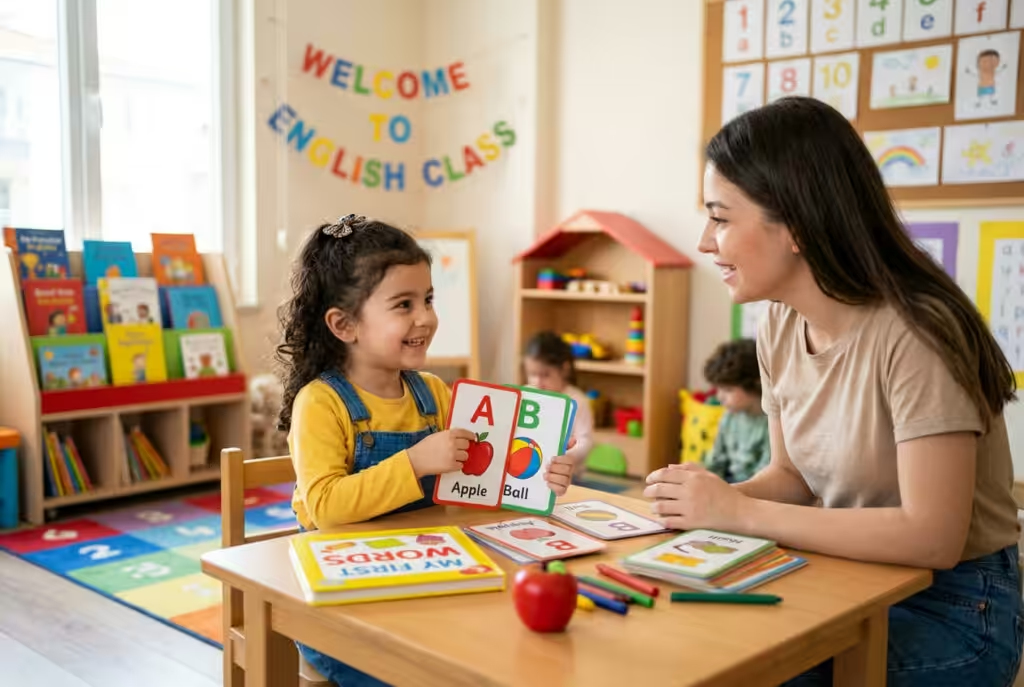
If you’re wondering when your child should start learning English, you’re in good company — it’s one of the questions we hear most from parents of young children. And the instinct behind it is a good one. Early childhood really is one of the best windows a person ever gets for picking up a second language. But there’s a second question that matters just as much as when, and it’s the one most people forget to ask: how?
This article looks at what actually happens in a young child’s brain when they learn a language, the real difference between “doing English lessons” and living with the language, and what to look for in a preschool English programme worth its name.
Why Early Childhood Is Such a Good Time to Learn a Language
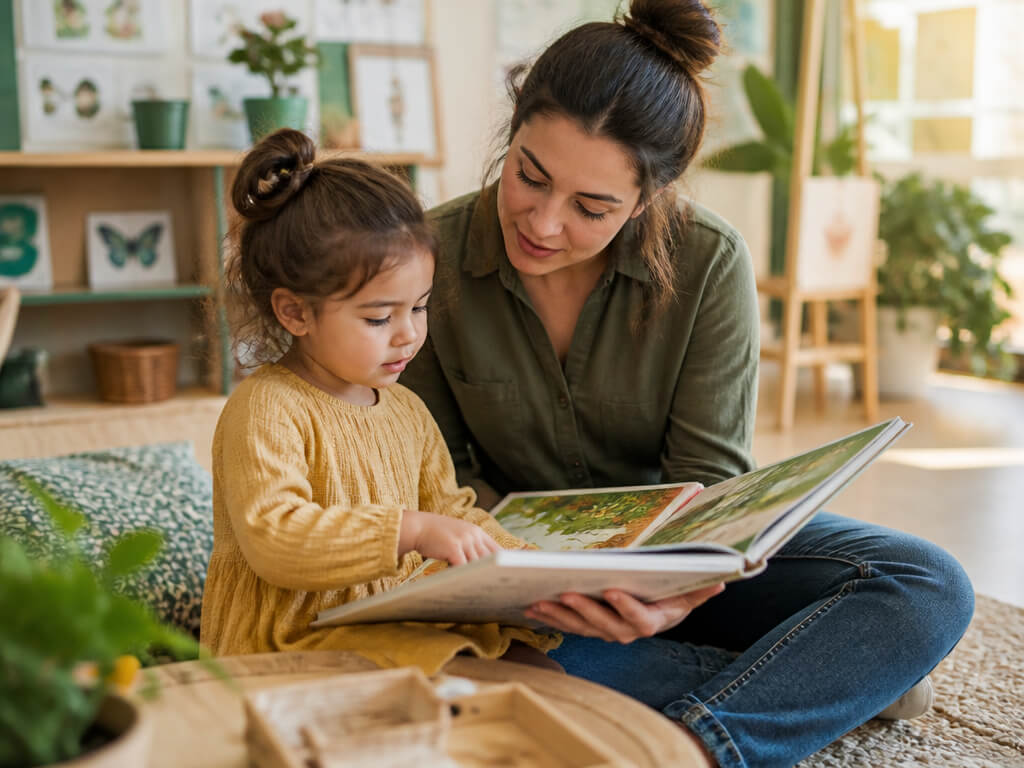
In the first years of life, a child’s brain soaks up language with almost no effort. A young child doesn’t sit down and memorise rules — they absorb a new language the same way they picked up their first one: naturally, through play, barely noticing they’re doing it. The hard work that costs an adult months of study, a small child does without breaking stride.
You can hear it most clearly in pronunciation. Children who meet a second language early often go on to speak it with a natural, near accent-free ease that’s very difficult to achieve later on.
There’s a catch, though. Making the most of this window depends entirely on how the language reaches the child. A couple of hours of “English lessons” a week simply isn’t enough to switch on that natural, absorbing kind of learning.
“English Lessons” Versus Living with the Language
Plenty of schools will tell you they “teach English.” The trouble is that the same phrase can mean wildly different things — and the difference decides what your child actually walks away with.
At one end, English is a subject on the timetable. The children file into an “English lesson” at a set hour, learn some words and phrases, and then switch back to their first language for the rest of the day. English ends up filed away in the child’s mind next to maths or music: something you study.
At the other end is natural language acquisition. Here English isn’t a lesson at all — it’s woven through the ordinary day. The children hear it and use it while they play, eat, and potter about in the garden. The language isn’t a subject to be taught; it’s an environment to live in. This is how children genuinely acquire a language: they take it on board rather than revise it.
That difference points to one of the most useful questions you can ask on a school visit: will my child treat English as a subject, or live it as a normal part of the day?
A language isn’t a subject to be taught — it’s an environment to be lived in.
But Won’t Early English Set Back Their Turkish?
This is the worry we hear more than any other, and it’s completely understandable. Won’t two languages at once muddle them? Will their Turkish suffer?
The short answer is no. Research in developmental linguistics is consistent on this: children raised in a healthy, balanced bilingual setting don’t fall behind in their mother tongue — they build both languages soundly. A young child’s mind copes easily with two languages side by side. And when they briefly mix the two (what linguists call code-switching), that’s not a warning sign — it’s a normal, expected stage of growing up bilingual.
Once again, what makes the difference is the how: giving the child the language in a way that’s rich, consistent, and right for their age. It’s the worry that stops most parents in their tracks, so we take it on in full in our guide to whether early English sets back a child’s Turkish.
What to Look for in a Good Preschool English Programme
As you look for the right place for your child, these are the questions worth asking:
How much of the day is actually in English? Is it boxed into a single lesson, or does it run right through the day? Real acquisition needs that constant contact.
Who teaches the English, and what are they qualified in? How good the outcome is comes down to the teachers’ grounding in language and child development. You want educators who don’t just speak English but understand how young children take a language on board.
Does the approach shift with age? A two-year-old meets language very differently from a five-year-old. A good programme is built around that difference rather than treating every age the same.
Is the language tied to real content? One of the most effective approaches lets language go hand in hand with meaningful content. The child uses English to do something real — a science activity, an art project — and picks it up in a context that actually means something to them.
How We Approach English at Sun Preschool
At Sun Preschool, English isn’t a lesson on the timetable — it’s part of the fabric of the day. Our English teachers are part of the day from start to finish, so our children meet English naturally through play, activities, and everyday routines, because a language only really sticks when it’s lived in.
What makes that work is the way our teachers share the classroom: our children spend the whole day in a setting where their mother tongue and English both come at them naturally. In our English activities the language is always tied to something the children are actually doing, not drilled in the abstract.
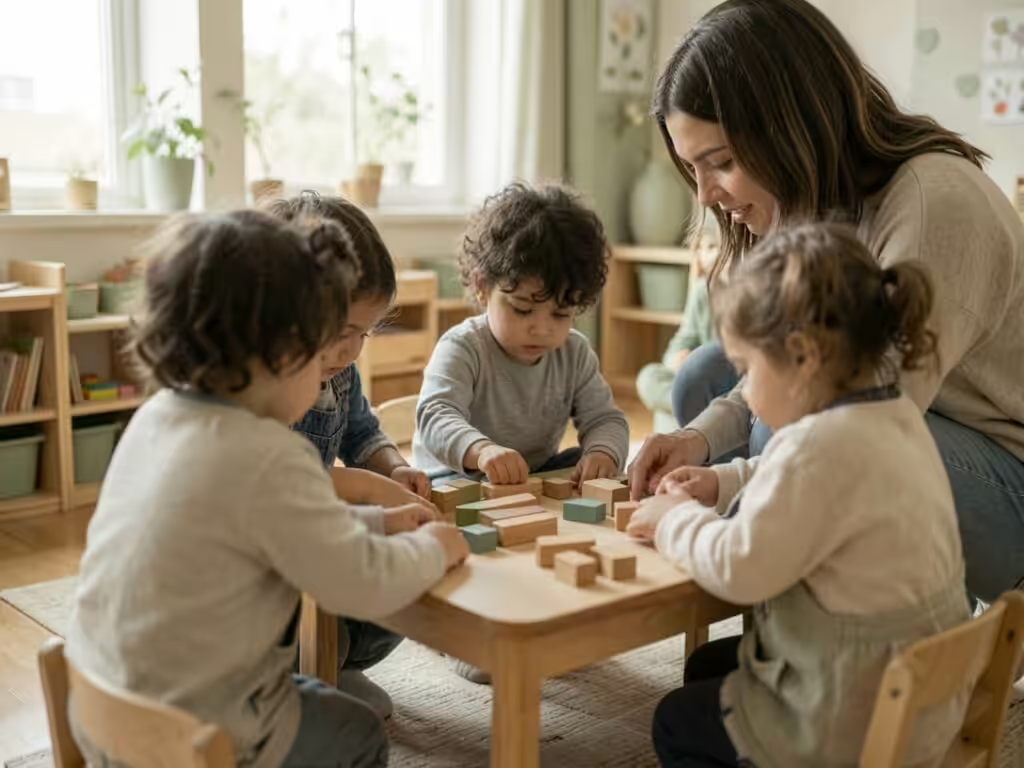
Our English programme is led by educators with serious depth in the field, and it’s that grounding in language acquisition and child development that shapes the relationship our children build with English.
The Takeaway: “How” Matters as Much as “When”
Early childhood is a genuinely valuable time to start a second language — but the real key is bringing your child to the language the right way: as something they live in day to day, not a subject they sit through.
If you’re looking for that kind of setting for your child, we’d love to show you how English is woven through an ordinary day at Sun Preschool. Get in touch to arrange a visit and see our classrooms for yourself.
References & Further Reading
- American Speech-Language-Hearing Association (ASHA) — Learning More Than One Language
- Center on the Developing Child at Harvard University — Activities Guide: Enhancing and Practicing Executive Function Skills
- Byers-Heinlein, K. & Lew-Williams, C. — Bilingualism in the Early Years: What the Science Says
Frequently asked questions
How much English do the children actually get?
We don’t cap English at weekly lesson hours — our English teachers are part of the day from start to finish.
- Ages 2–3: Children spend the entire day with their English teachers alongside their class teachers, acquiring the language naturally through play and daily routines.
- Ages 4–5: English teachers accompany activities for most of the day; children also work only with their English teachers, strengthening their active speaking skills.
To protect children’s expressive strength in their mother tongue and their cultural roots, most of our specialist classes are held in Turkish.
Who teaches English at your school?
Our English program is led by graduates of university English Language Teaching (ELT) departments with at least 5 years of early-years experience.
For us, speaking the language is not enough on its own: what matters is knowing how to teach it to young children and understanding child pedagogy. That is why our English team is built from professionally trained teachers, not simply from people who happen to speak English.
My child doesn’t speak any English — will they struggle?
No — our programme assumes no prior English at all.
Children acquire English by listening, playing and living the language in the natural flow of the day. There is no memorization and no pressure; each child absorbs the language at their own pace, feeling safe and confident. Starting school with zero English is never a disadvantage here.
What if no one at home speaks English?
That’s completely fine — and very common. A child doesn’t need English at home to build their English at preschool; they need rich, consistent exposure somewhere, and a warm, high-quality setting provides exactly that. The most useful thing you can do at home is keep your own language strong and loving. A confident first language is the foundation a second one builds on.
Is my two-year-old too young to start learning English?
No. The early years are one of the best windows there is for a second language, and good programmes meet a two-year-old very differently from a five-year-old — through play, songs, and routine rather than lessons. It isn’t about rushing academics; it’s gentle, everyday exposure at the child’s own pace.
Won’t a couple of hours of English a week be enough?
Usually not, if the goal is for a child to genuinely acquire the language rather than memorise a handful of words. Real acquisition needs steady, everyday contact — the language woven through play, meals, and routines — not a single slot on the timetable. It’s the difference between studying a language and living in it.