Will bilingualism set back my child’s Turkish?
It’s the concern we hear most from parents. The short answer: no. The long answer says a few more reassuring things about your child.
One question comes up in almost every tour: “If English starts this early, won’t her Turkish fall behind?” The parent asking comes from a reasonable place — when a child is still learning their first language, a second one can intuitively look like competition.
But language acquisition is not a race. Two languages are not rivals fighting over the same pie; they are two roots growing together. Here is what both the research and more than twenty years of classroom experience have shown us.
Where the worry comes from: “mixing”
The most concrete trigger is usually this moment: your child comes home and says, “Anne, I put on my ayakkabı myself.” To a parent, that sentence is an alarm bell. Linguists call this code-switching, and to them it is not a breakdown at all; it is a sign of skill.
A code-switching child is accessing both vocabularies at once, calculating in a split second which word comes easier, and slotting it in without breaking the grammar of the sentence. In time, the child also learns to separate languages by listener.
Mixing is not two languages colliding; it is two languages shaking hands in the same mind.
What the research says
Early-childhood bilingualism is one of the most studied topics in development, and the findings are consistent: children with balanced exposure to two languages do not fall behind monolingual peers in their first language. The combined vocabulary is typically larger, and the gap closes by school age.
Growing up bilingual also carries documented benefits beyond language: bilingual children show consistent advantages in managing attention, taking perspectives, and mental flexibility.
What we observe in the classroom
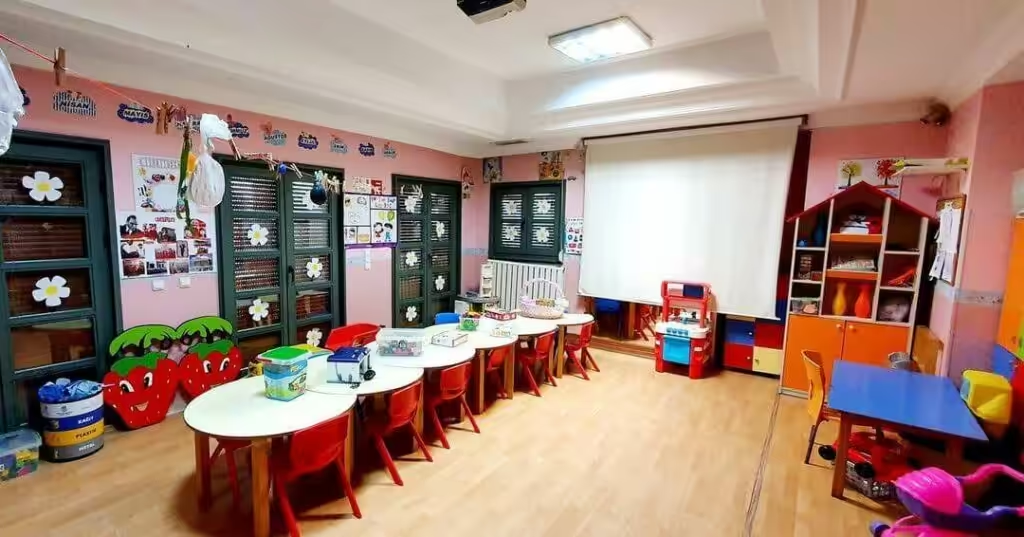
We watch the same pattern every year. In the first months children follow English instructions through body language, then one-word answers arrive, then songs and set phrases. Their Turkish keeps developing at its own natural pace throughout.
What about late talkers?
There is no reliable evidence that bilingualism worsens a language delay; if a delay exists, it shows in both languages, and dropping to one language does not fix it.
What you can do at home
Our most frequent advice often surprises parents: don’t drill English at home. Your job is to enrich Turkish — abundant conversation, stories, rhymes, books together. The stronger the child’s first language, the firmer the ground the second language stands on.
If your child comes home with an English song, sing along. Echo, not correction. Your child’s brain handles the rest.